Hazel Holloway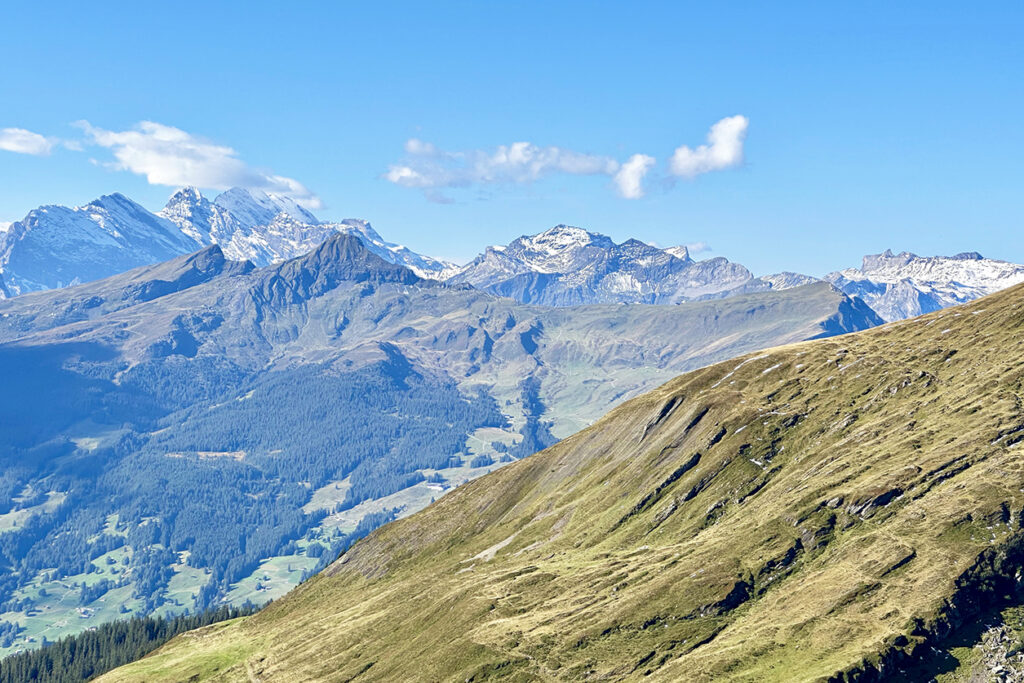
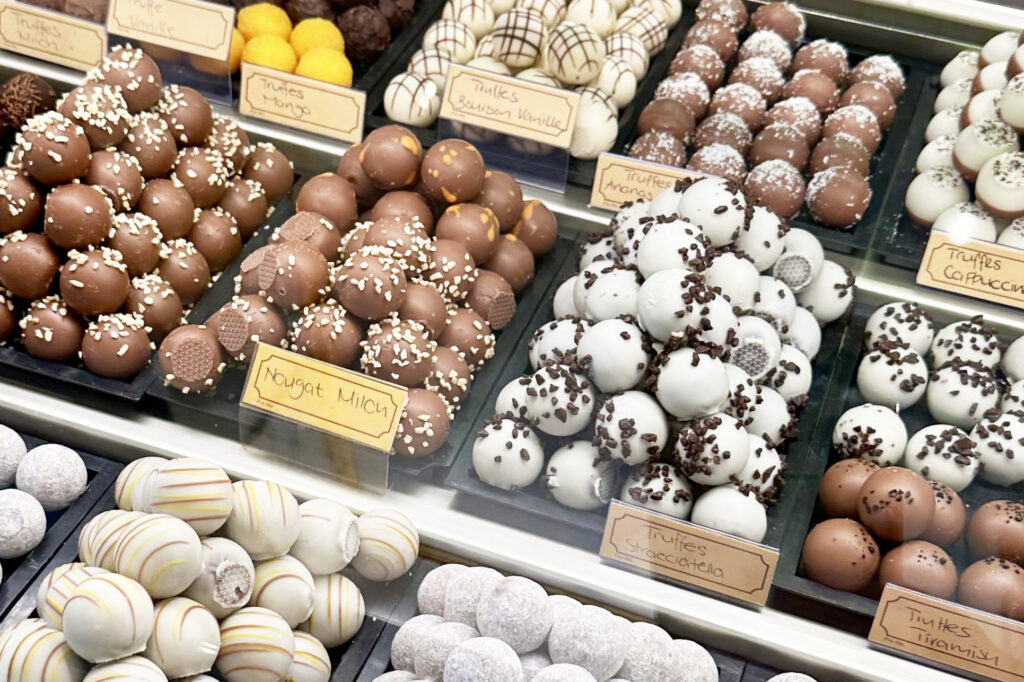
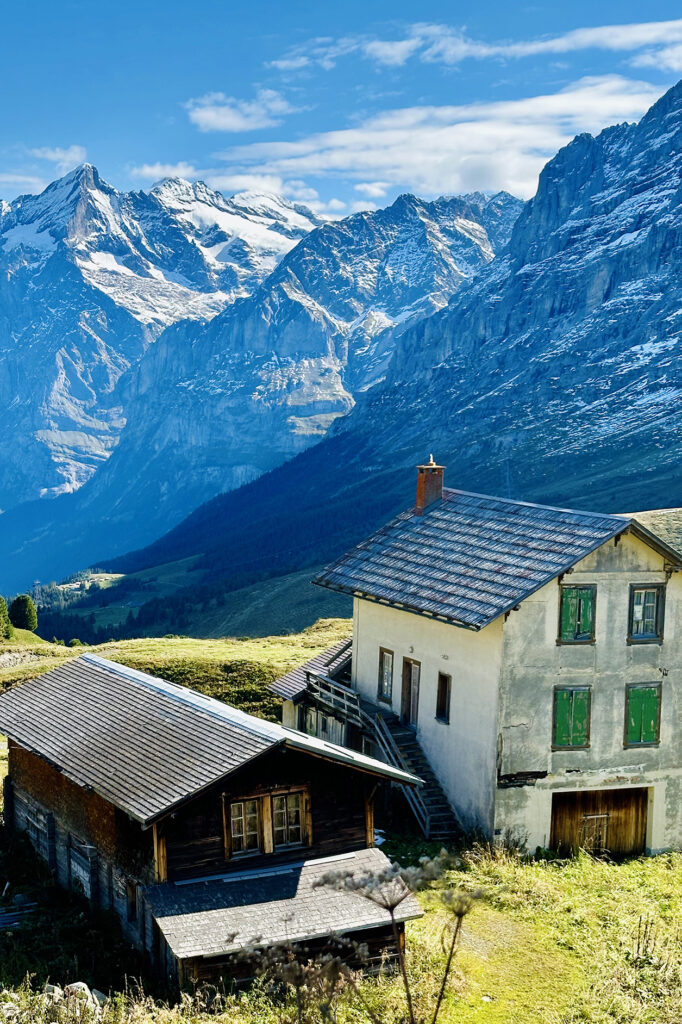
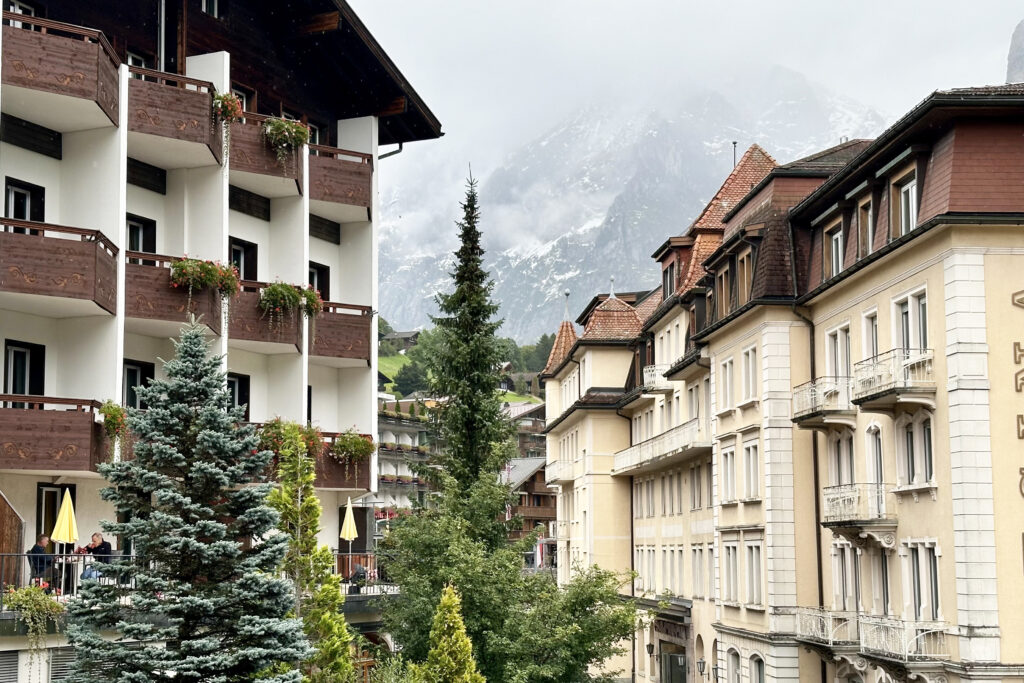
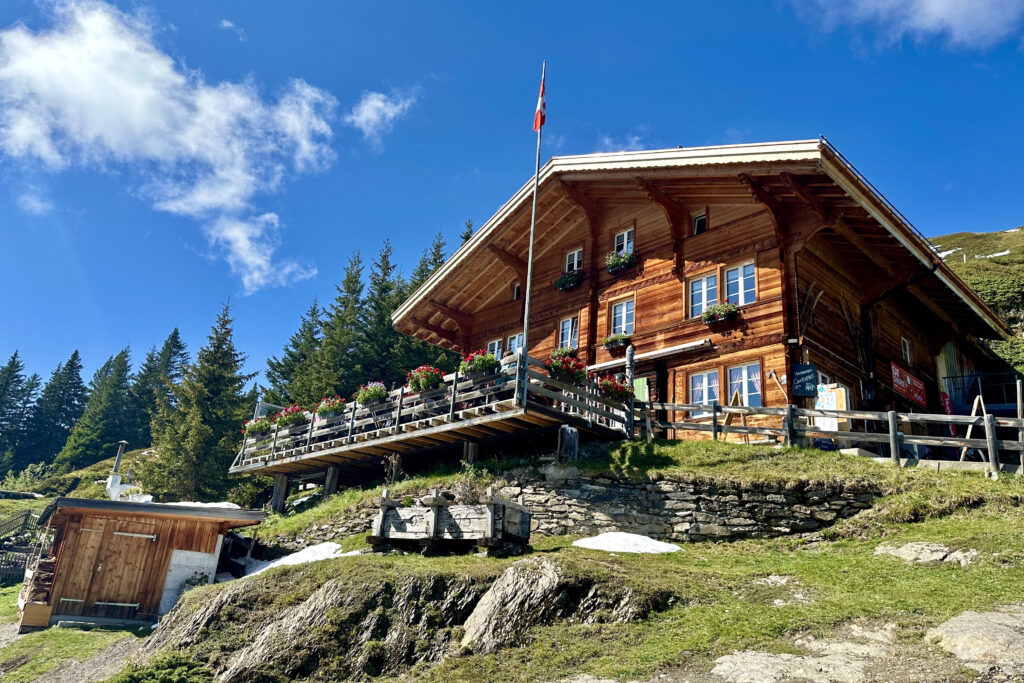
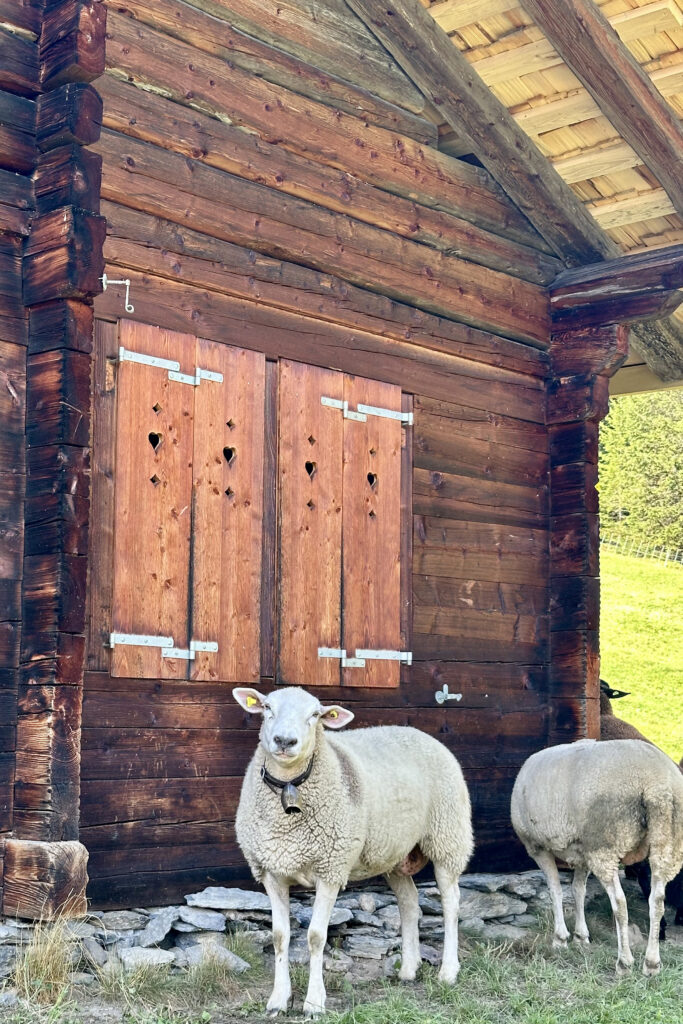
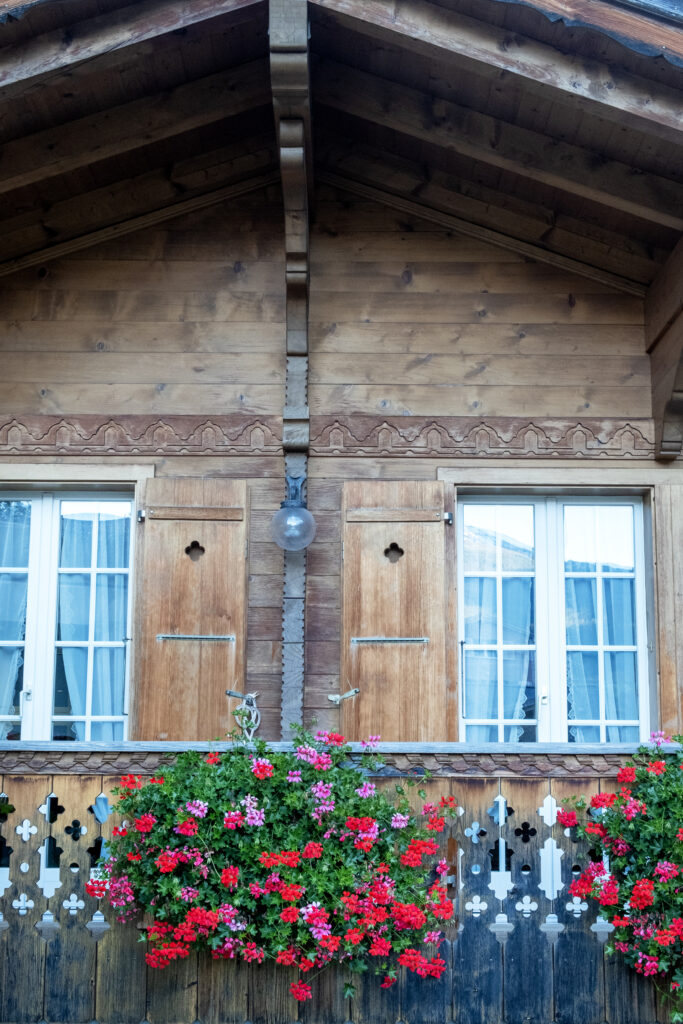
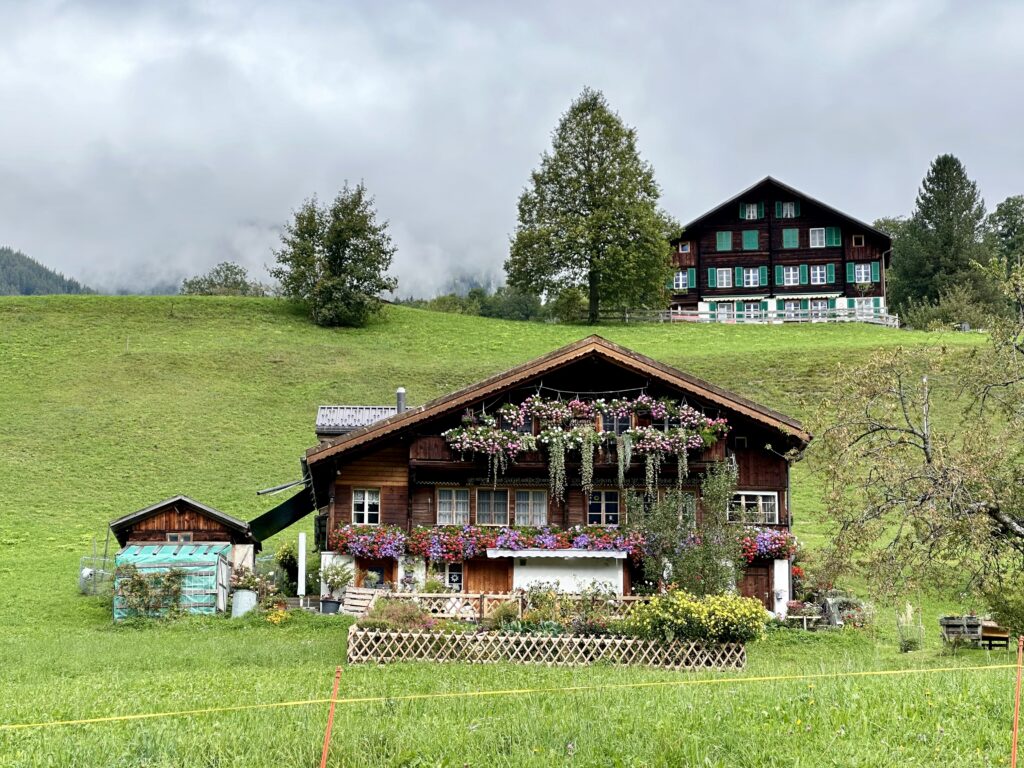
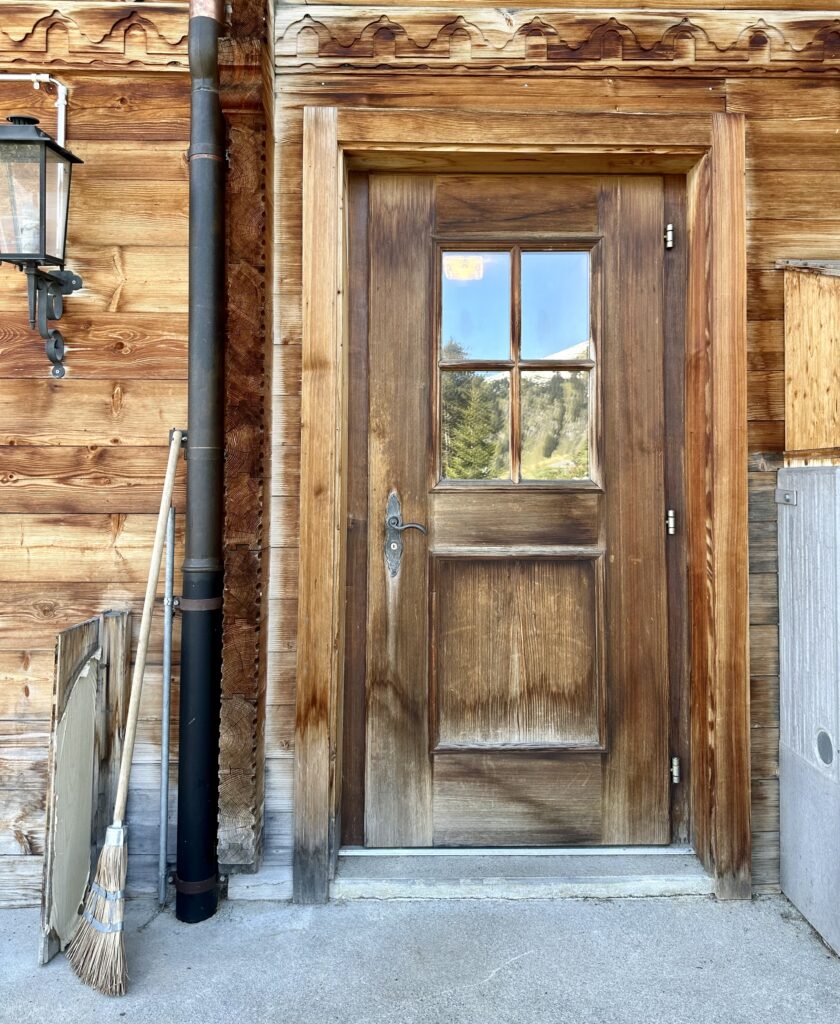
Honestly, I couldn’t find a Wispa or a Twirl anywhere in Grindelwald — just this chocolate called Lindt — and the Swiss seem to have no imagination when it comes to houses. Everywhere you look: wooden chalets. All the same. All very wholesome. The sort of rustic, timeless charm estate agents froth over but which, in reality, looks like someone copy–pasted “Alpine Cottage” across the entire mountain range.
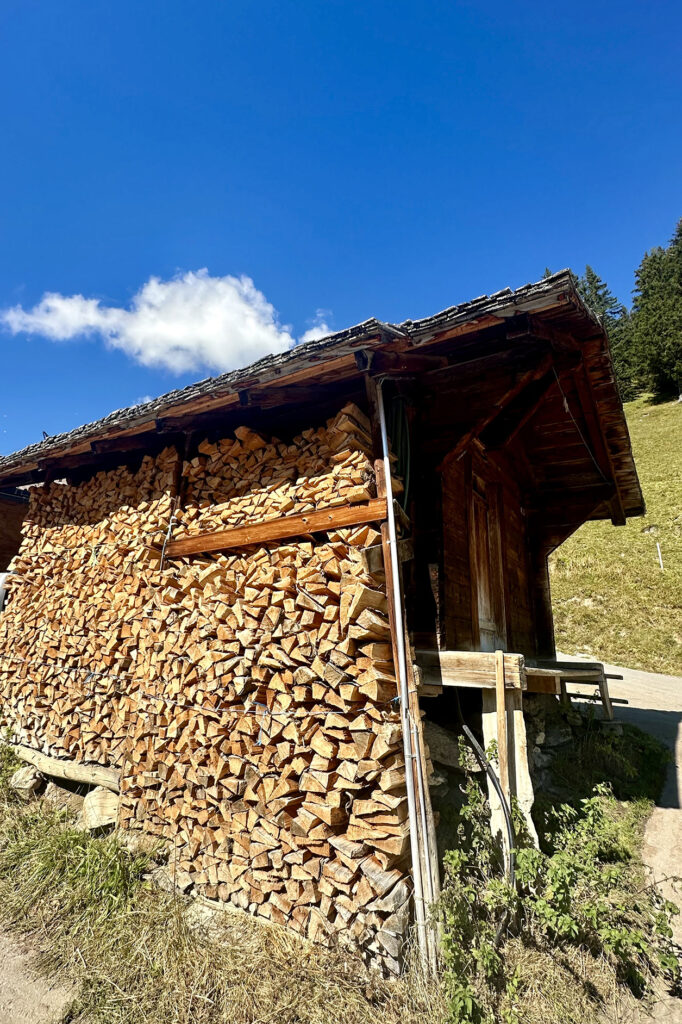
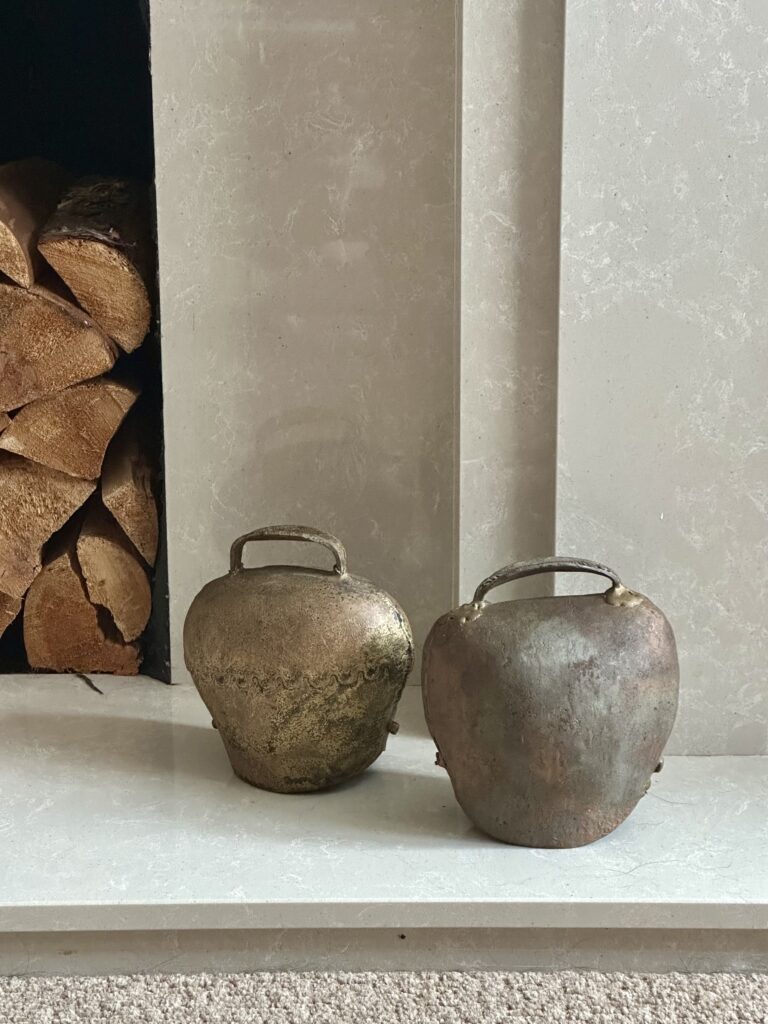
Firewood stacked like showroom displays, ready for long winter days — you know, the sort where you wear big wool-lined boots, shuffle to a café for hot chocolate, and admire the peaceful snowfall. Even their balconies overflow with pink petunias as if they’ve all signed a floral compliance contract. Simply beautiful.
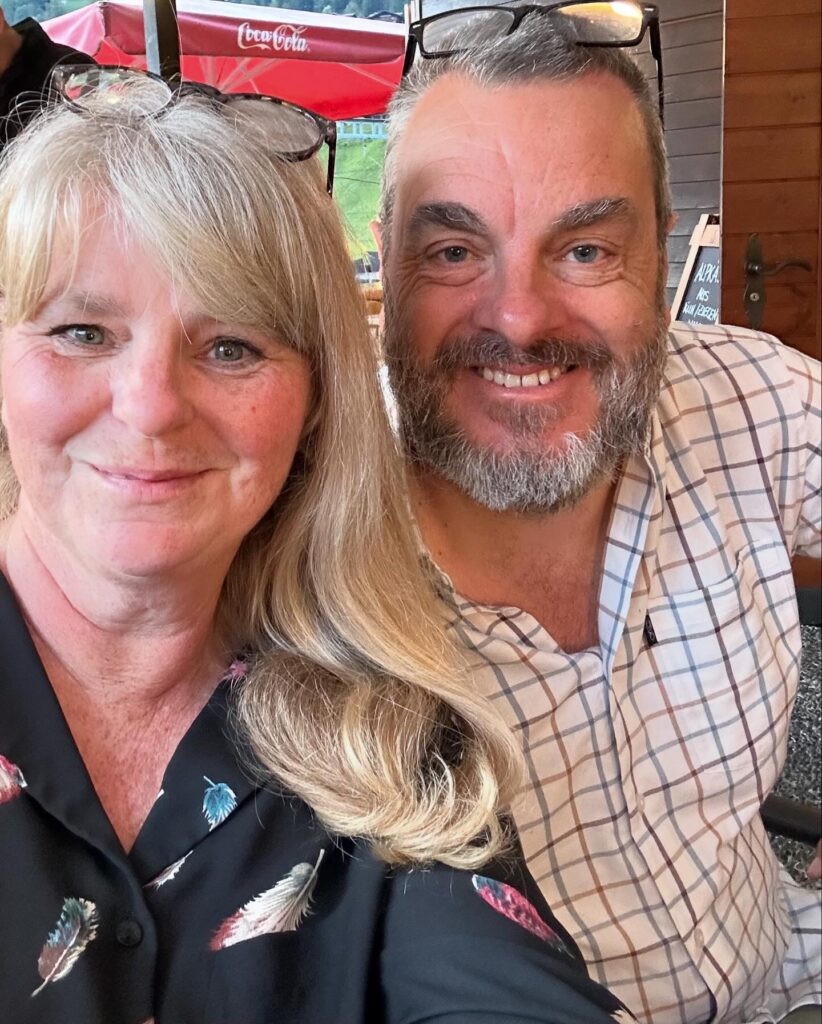
Now, if you’re like us — mid-50s (one of us having boldly crossed into 60) — budget-loving travellers who are technically fit but mostly nostalgic for the fitness you used to have, this is for you. If bending down now comes with a noise and one of you is menopausal, complete with night sweats and existential sighing — read on.
We went to Grindelwald: a place where everything is uphill, and somehow downhill feels uphill too. Where a sausage roll costs £7, dinner for two is £80 without wine, and you begin to seriously consider the nutritional value of air. And yet — we made it work! They say it’s one of the most expensive places to stay in Europe. But is it? Spoiler: yes… unless you’re strategic, stubborn, or too northern to be fleeced without protest.
Let’s start with the basics: travel. We flew BA from Manchester to Zurich in September — the bargain season, if Switzerland even has one — with a quick change in London. About £200 each. Not bad. Then we got a train to Grindelwald. Straightforward, apart from us managing to buy a same-day return instead of a six-day one. Between us we were overdue eye tests and, in a stroke of genius packing, had left one pair of glasses in the suitcase. So we shared specs, passing them back and forth like some kind of middle-aged secret agents deciphering clues. Thankfully the ticket office solved it instantly.
The train was on time — a novelty if you’re British. We bought a sandwich and coffee, plugged in our phones, and tried not to cry at the bill. £27 for a tuna baguette and one coffee — we savoured every crumb like it was gold dust.
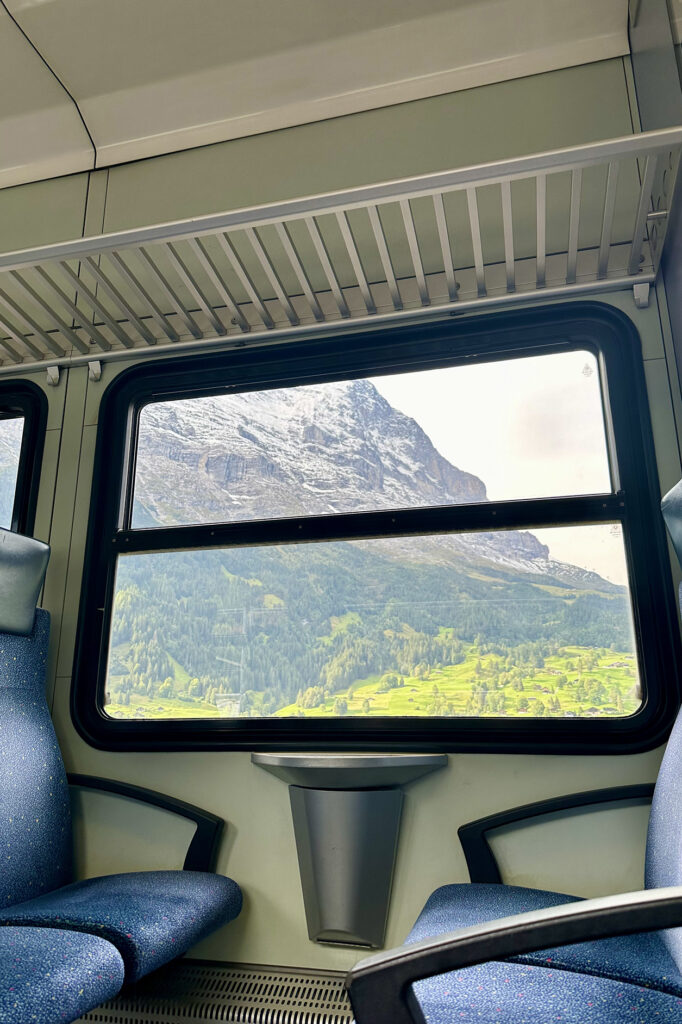
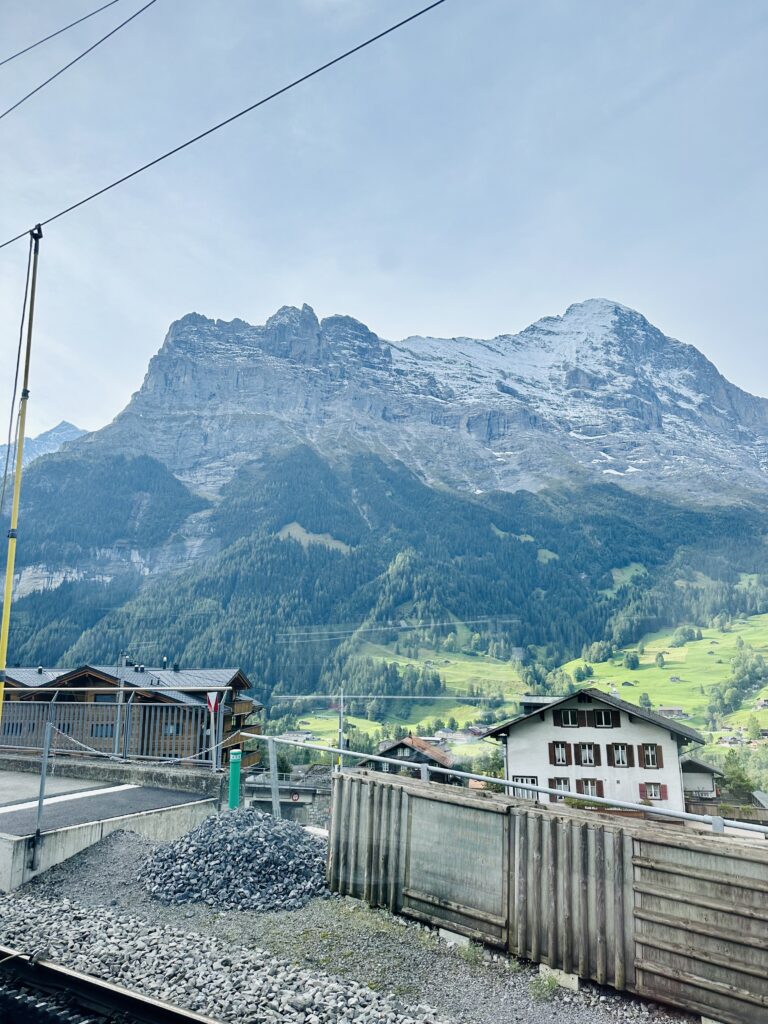
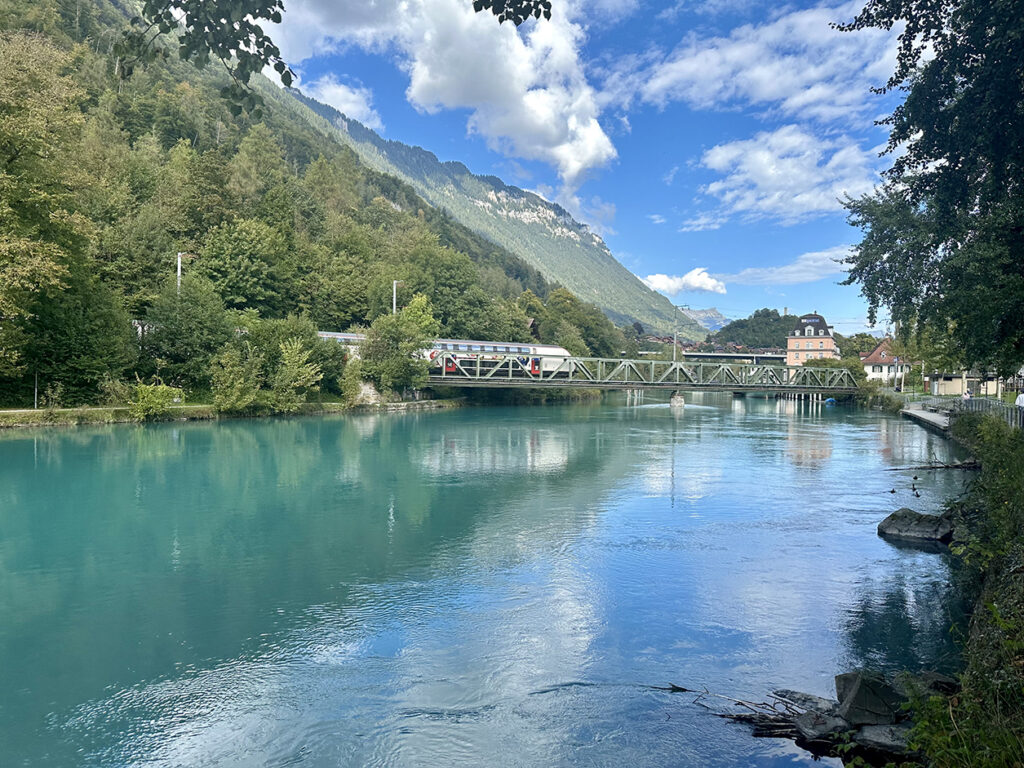
At Interlaken Ost we transferred to the Berner Oberland Bahn. A scenic journey — if you could see it. We couldn’t – it was crowded. One woman raved about rolling emerald valleys and dramatic mountain peaks. I took her word for it — all I saw was the back of Kevin’s head while wedged against the carriage wall, clutching our bags. When we approached Grindelwald, she squealed, “It’s the Eiger!” Good for her.
Our hotel was a five-minute walk from the station, which was ideal because our bags were heavy and our knees were now unreliable. Before checking in, we bought a four-day Swiss Travel Pass — the golden ticket of Swiss transport. Unlimited trains, buses, boats, cable cars, and entry to 500 museums. Plus up to 50% off excursions like Jungfraujoch. £260 each — not cheap, but much cheaper than paying individually.
If you’re 25 or under there’s a 30% discount — not that we remember what 25 feels like.
Our hotel location was perfect. Rooms at the back had magical views of the Eiger — just as the excitable train lady promised. We stayed at the front, which was code for “cheaper.” If I leaned out the window at a dangerous angle while Kevin held onto my legs, we too could glimpse the Eiger. Mostly, though, our view was another hotel. It saved us money, and since we spent most of the time in our lying down recovering from thousands of Swiss steps, we weren’t bothered.
It was a budget place but warm and cosy, with a fantastic shower. Breakfast was continental with plenty of choice — bread, cheese, fruit, and eggs, so good we smuggled some into our bags for lunch.
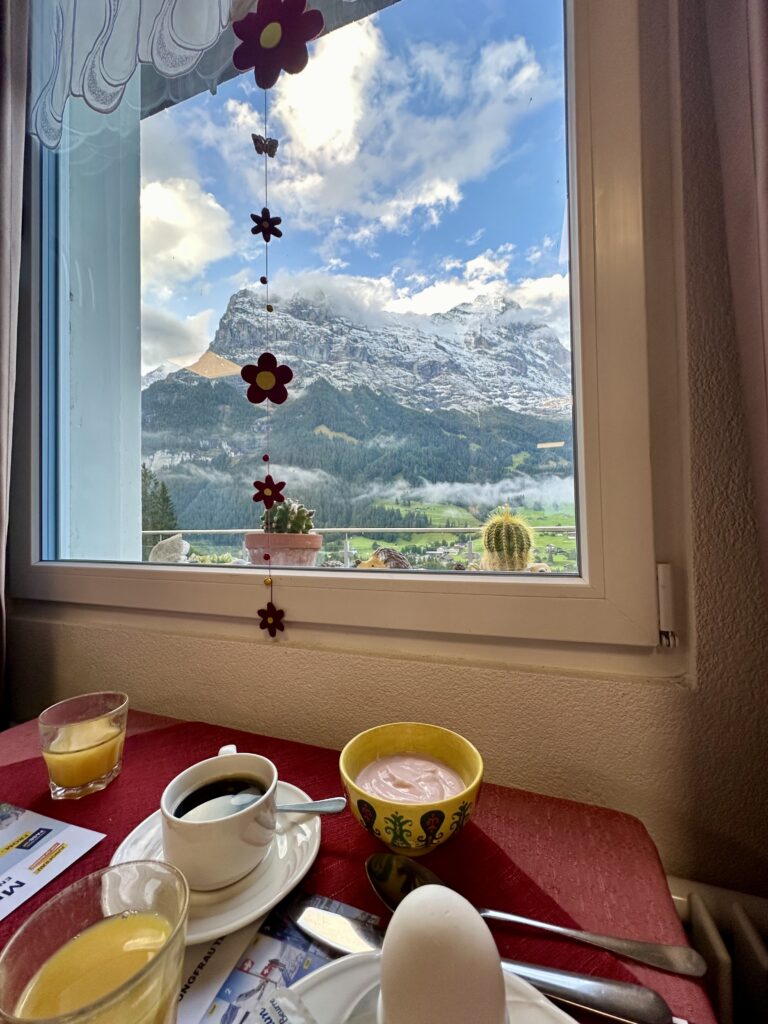
We spent the next five days walking, walking, and walking. Honestly, if Switzerland charged per step, we’d still be paying it off.
Day One: up early, ready for breakfast, practically buzzing. “Let’s do this!” shouted Kevin. We even did a few stretches in preparation for our first “gentle” trek.
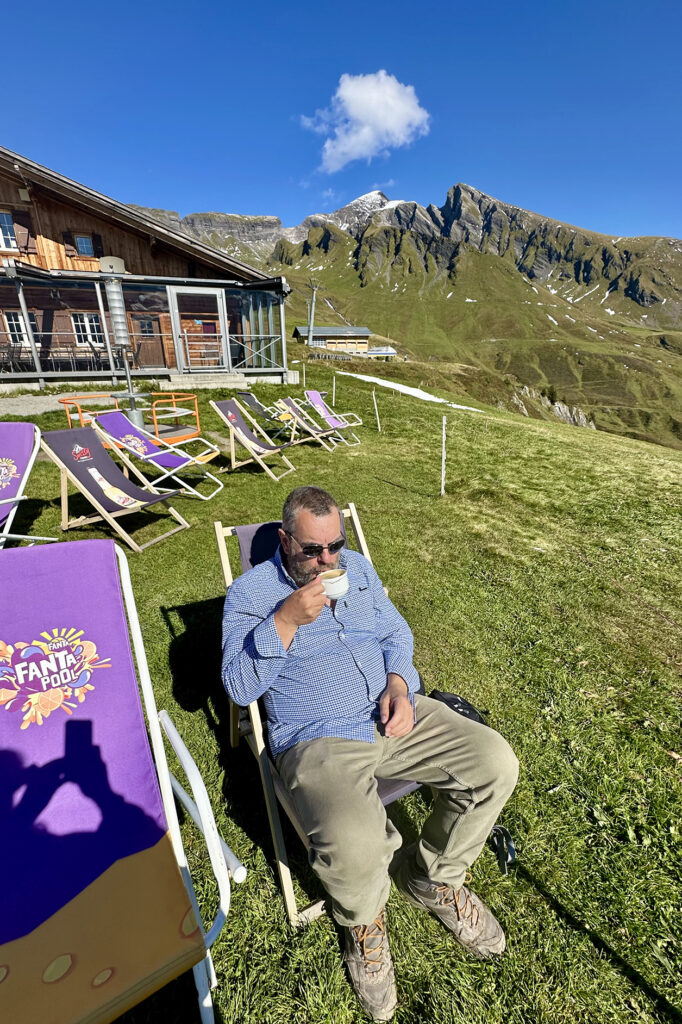
We took a cable car from near our hotel up to Männlichen and then walked to Männlichen Gipfel to see what all the fuss was about. People rave about the views. It was… fine. We sat for ages waiting for the clouds to shift, but they didn’t so much drift past as sit on us. One came so close we practically had to push it out of the way. Beneath the mist should have been a sweeping panorama of green forests and waterfalls — but we could hardly see a thing.
Meanwhile, the woman beside us declared she felt “on top of the world” and that it was “the most magnificent view she’d ever seen.” A little dramatic, we thought. Another woman waxed lyrical about how the mountains quietened her mind and made her feel calm and at peace. Each to their own, I suppose.
I asked Kevin what he thought.
“Bit tacky,” he said. Poetic soul.
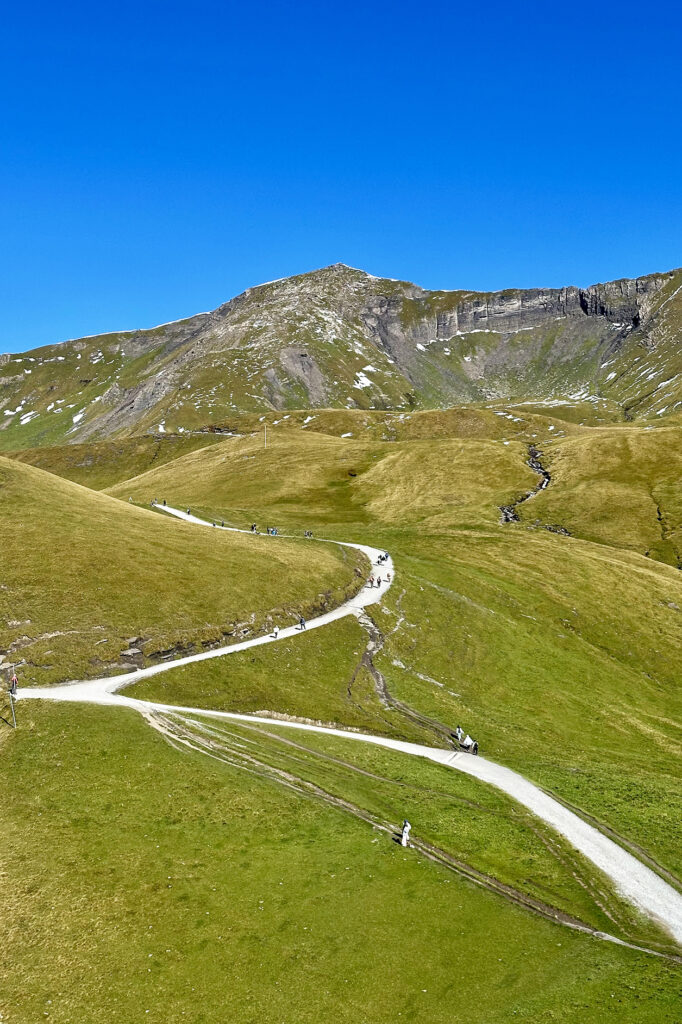
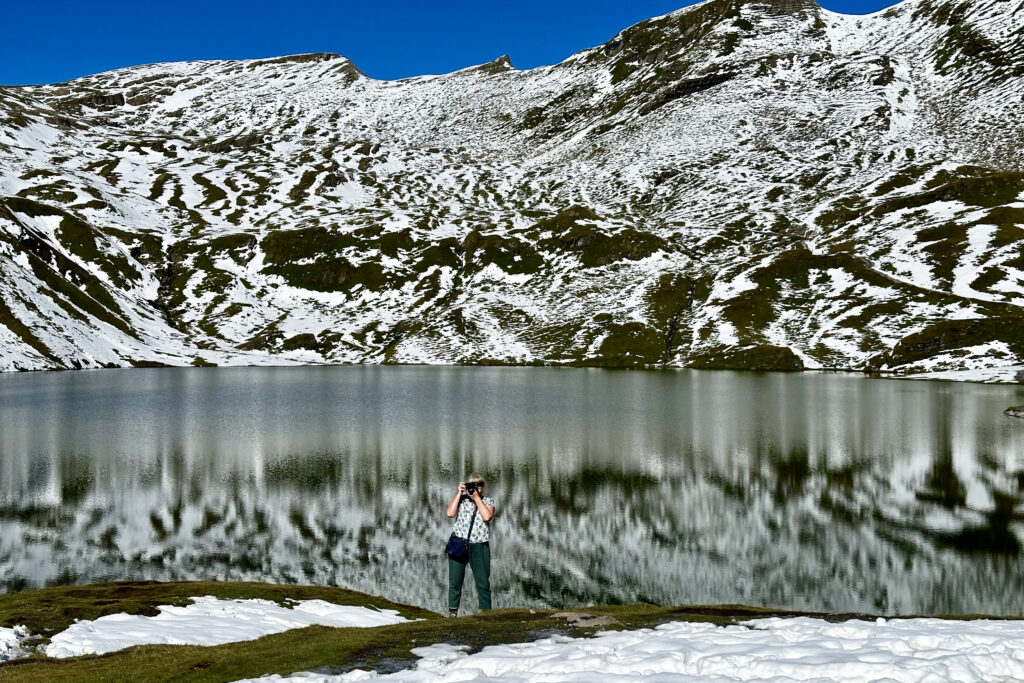
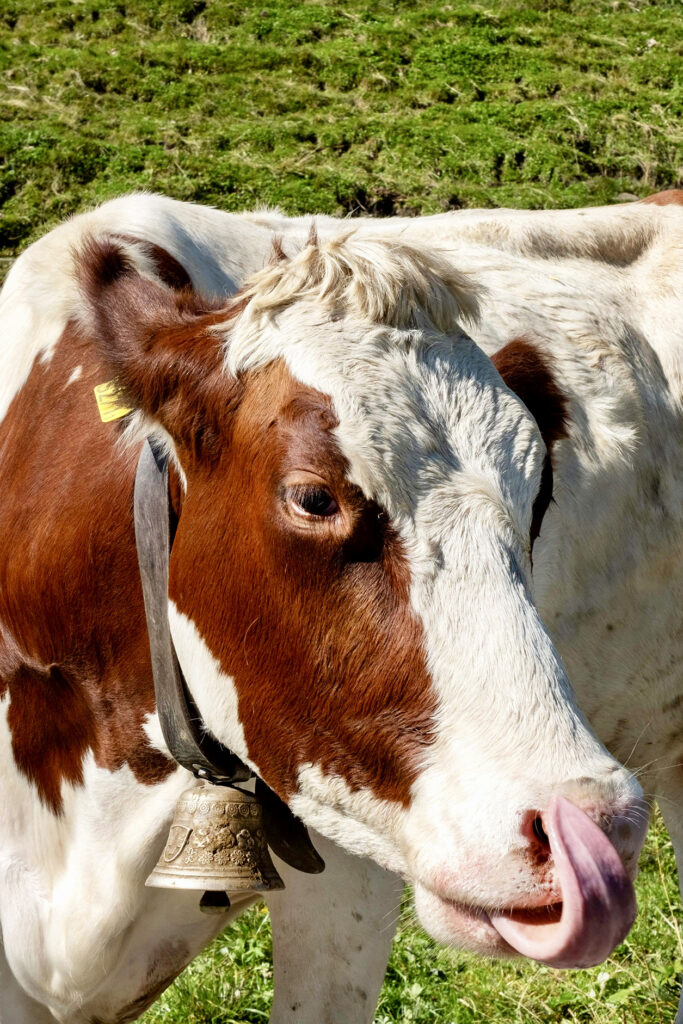
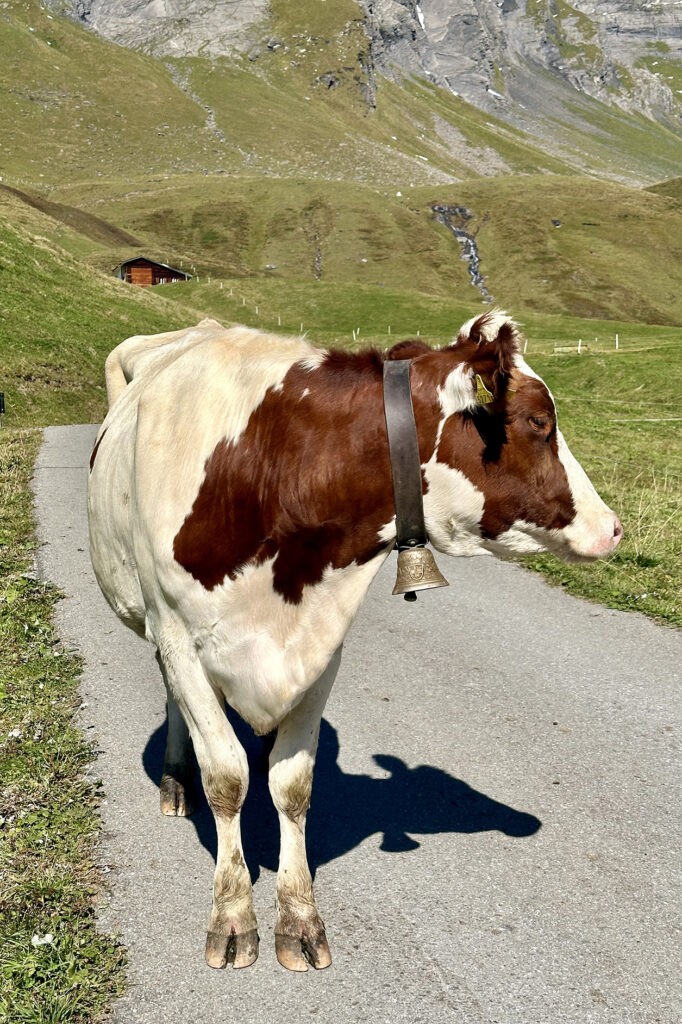
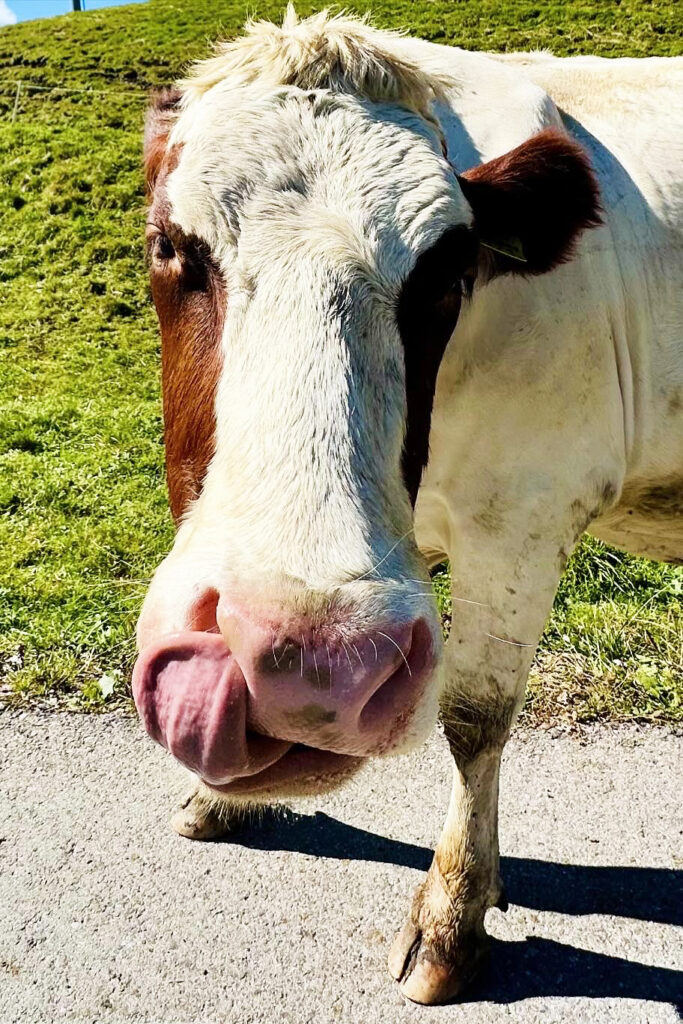
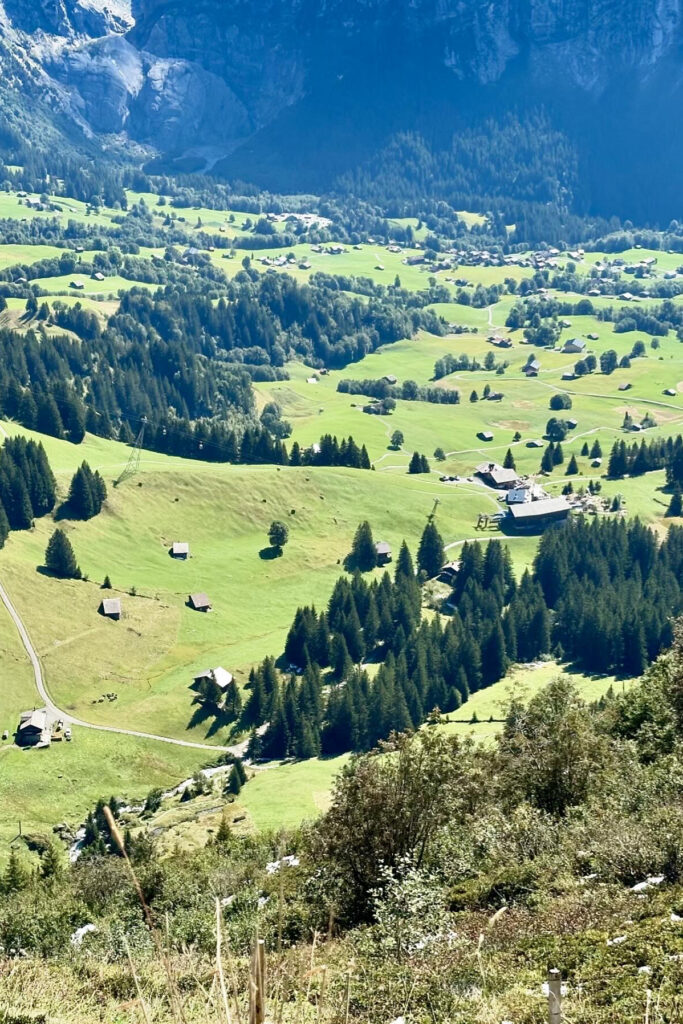
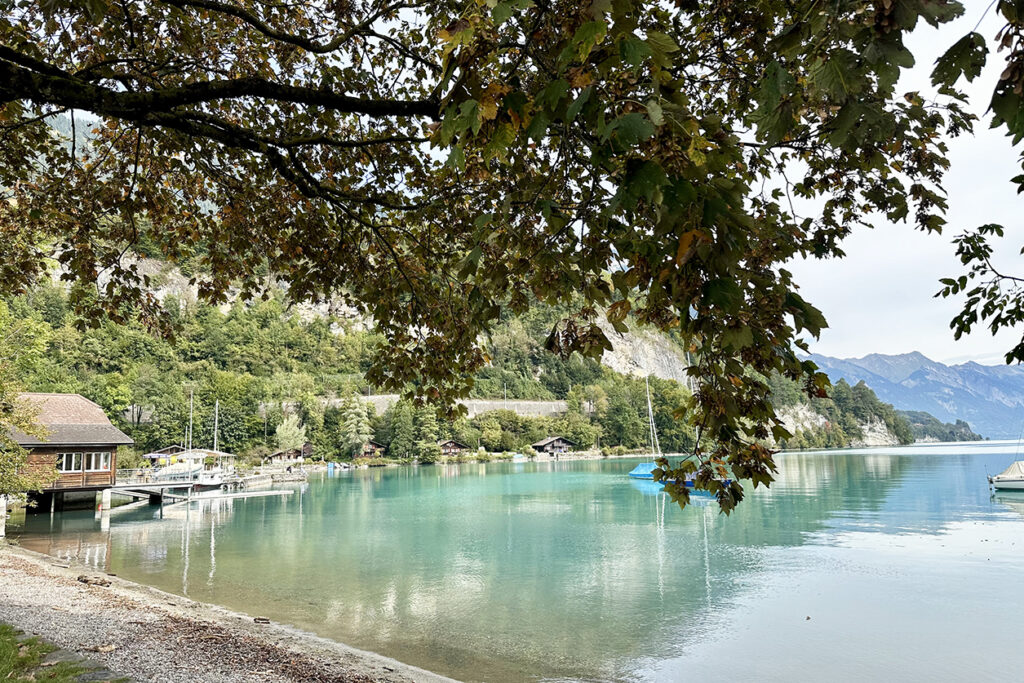
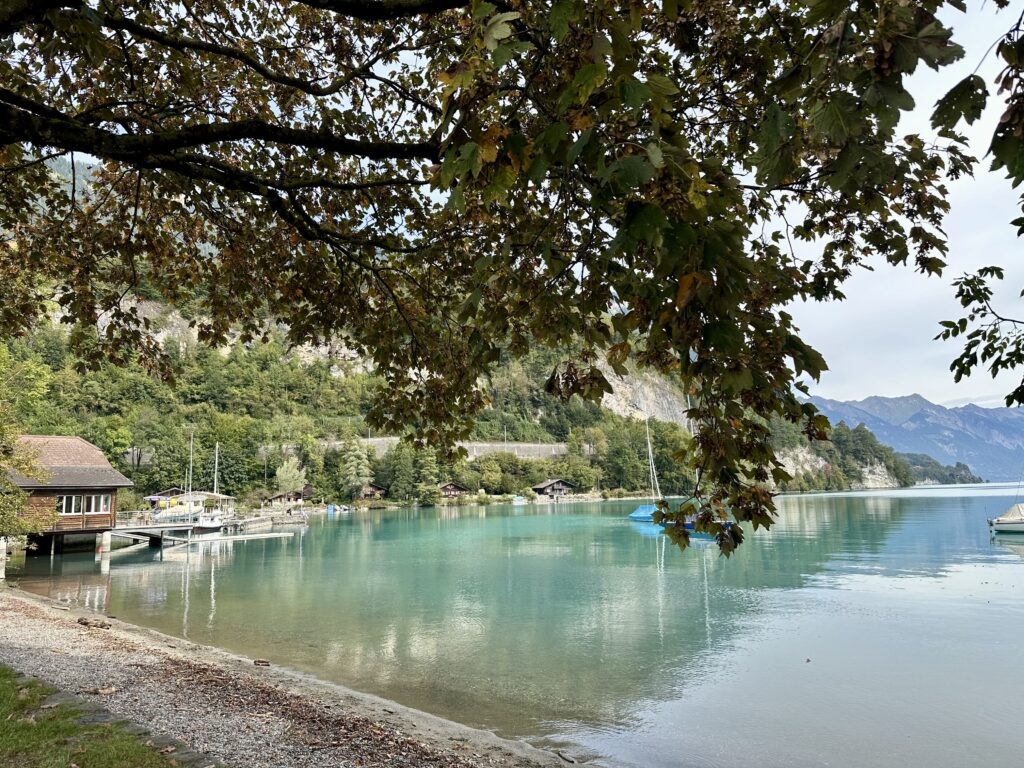
There wasn’t much else to do but walk, so off we went again — through mountains, past crystal-clear lakes reflecting everything like nature’s vanity mirror, through lush forests and grassy valleys dotted with sheep and cows. The bells around their necks were apparently meant to be charming, creating a “symphony.” In reality? A right bloody racket.Still, it was a welcome change from the screeching seagulls that live on our roof back in Knott-End-on-Sea.
Eventually, we staggered back to our hotel after six hours and more steps than we usually achieve in a week. The exhaustion was so intense we simply collapsed onto the bed like discarded marionettes and didn’t move again until 5 a.m.
On the upside, we saved about £80 by skipping dinner.
On the downside, we were starving, dehydrated, and shaped like damp cloths — and breakfast didn’t start until 6 a.m. Still, what a fantastic day and we slept like logs — the kind left out in the rain, slightly warped and questioning their usefulness.
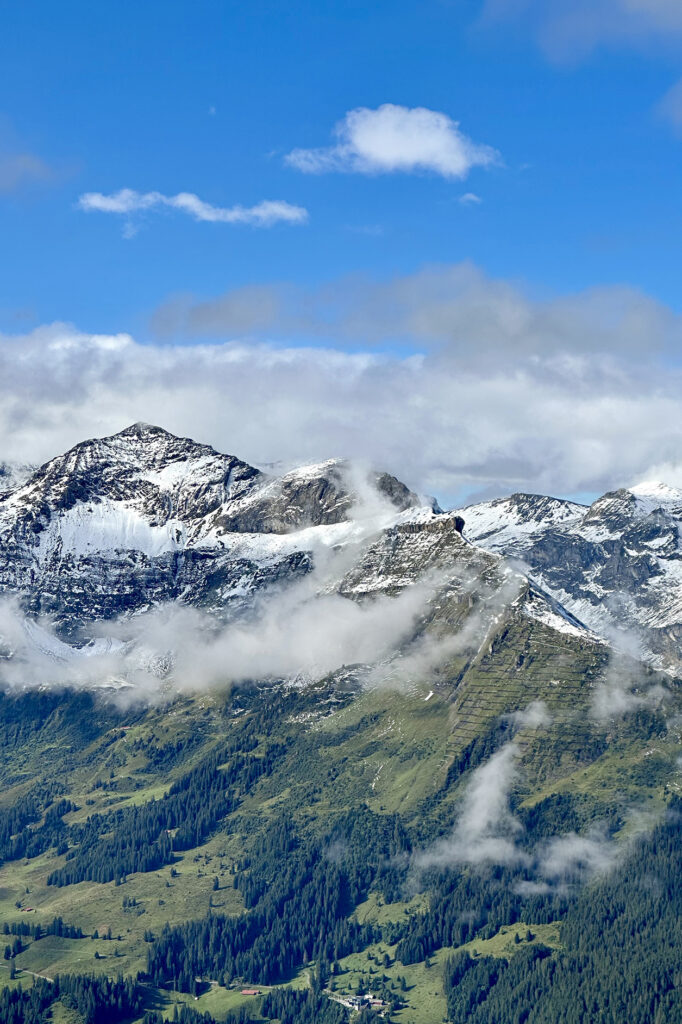
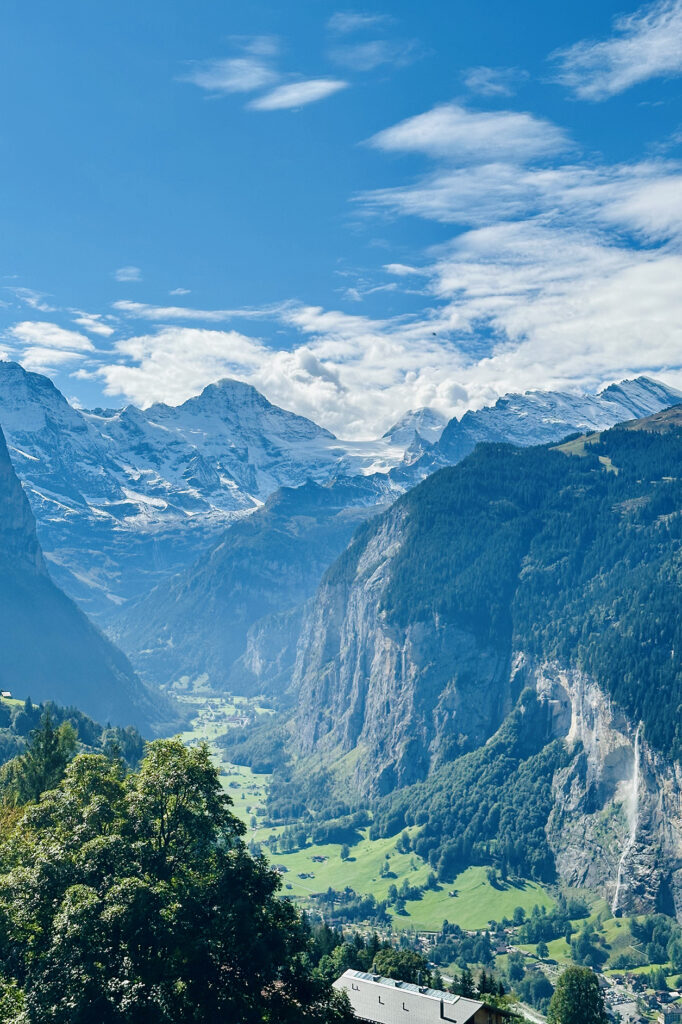
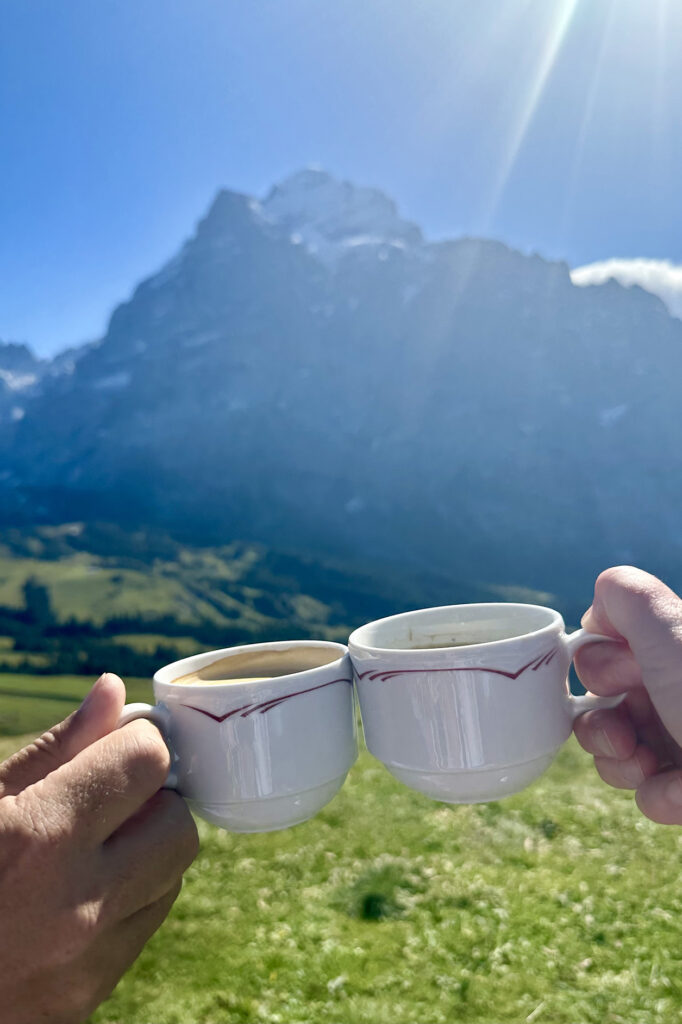

The loo is the first thing I need in the morning, long before the rest of my body has agreed to wake up. I’m sure many of my female friends understand this. Unfortunately, my calves were not in the mood to cooperate. When I stood up, everything from the waist down sent conflicting messages:
my legs were screaming “absolutely not,”
while my bladder was yelling “right now.”
The only way I could get to the bathroom was sideways, like a crab with dignity issues. On the way back, Kevin emerged doing the same sideways shuffle towards the loo, as if we were participating in some unspoken marital choreography.
Speaking of loos — take a look at this view from a toilet.
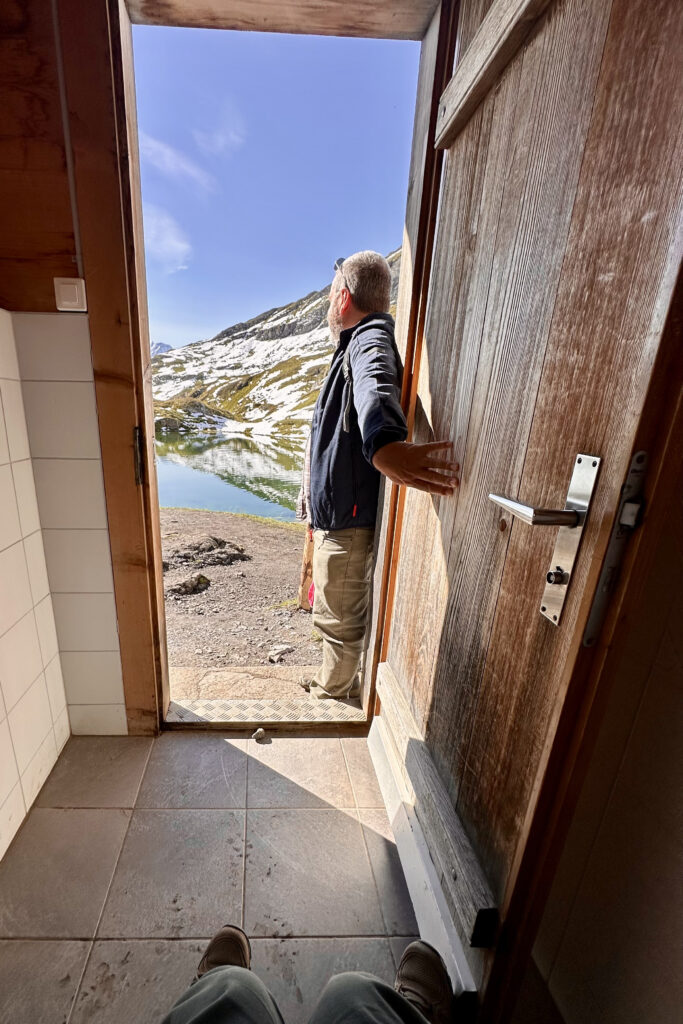
We didn’t get back into bed — instead we stretched again. This time we required assistance, like two people trying to assemble flat-pack furniture without instructions.
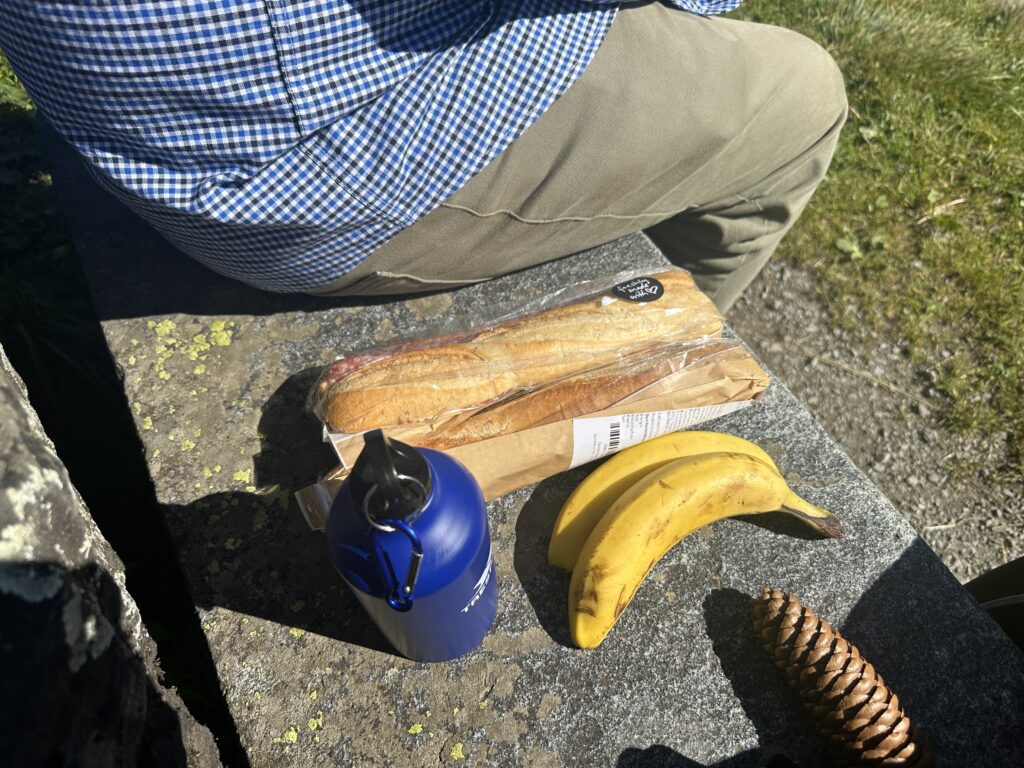
This was the day we’d planned to take a gondola to Männlichen (very high), then walk (a long way) to Kleine Scheidegg, and finally board a train (for ages, but gratefully) to Wengen for lunch. Somehow, we managed it. Lunch, incidentally, was a vast improvement on the expensive tuna baguette we’d endured on the train. Everywhere seems to have a reasonably priced Co-op, and we embraced that as if it were Michelin-starred dining.
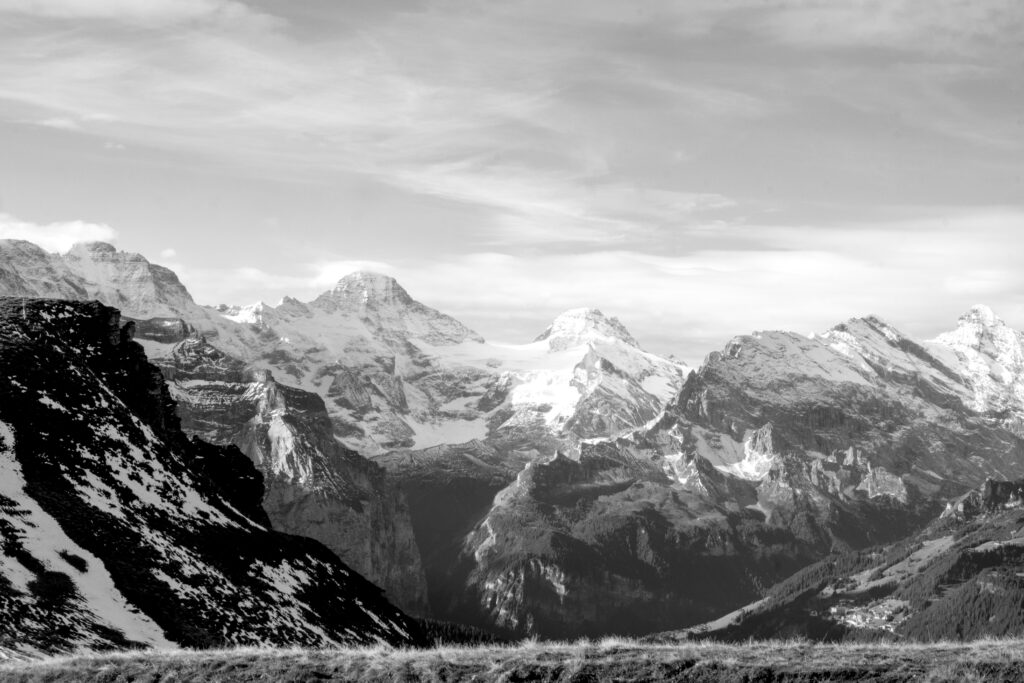
We sat in a shady park because at times the sun felt borderline hostile, and we gazed at yet another panorama of snow-peaked mountains. Beautiful, yes — but do the locals ever get sick of them? Or do they just shrug and say, “oh look, the Alps again”?
After lunch, we decided to take a cable car back to Männlichen. If you don’t like heights, here’s the strategy: stand in the middle, surround yourself with bodies, and close your eyes. I did, and the journey was instantly improved. Meanwhile, some thrill-seekers paid extra to stand on top of the cable car, surrounded only by air and questionable judgment. One couple took their toddler up with them — he looked at me on the way up the steps and silently mouthed “help.”
Once there, fuelled by coffee and some of that awful Lindt chocolate I’d discovered in my rucksack, we made a spur-of-the-moment decision to hop on another cable car up to Eigergletscher (also unreasonably high) and then take a leisurely cog train back to the village. All in, we clocked about 15k on foot. It was a good decision — at least according to our heads. Our legs filed a complaint.
Back at the hotel, we were determined not to use the lift, despite being on the third floor. With the aid of the handrail, we dragged ourselves upward one slow step at a time. Once inside the room, we didn’t dare sit down — we might never have risen again — so we washed, changed, and headed out for dinner. We made it through the meal, returned by 8 p.m., and surrendered to sleep by 8:10 — a new personal best.
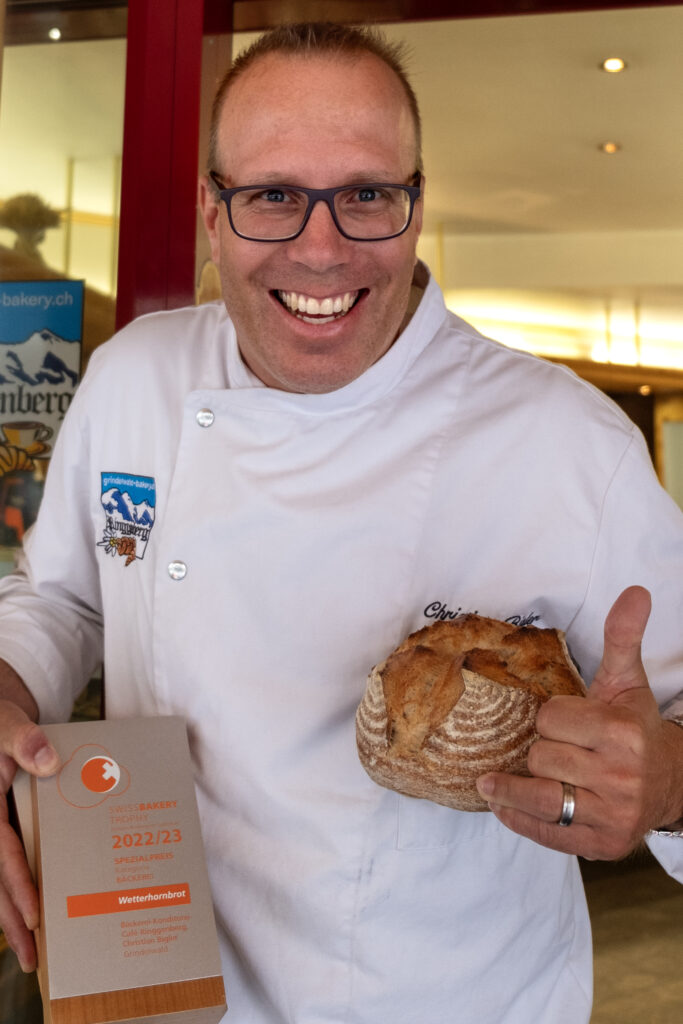
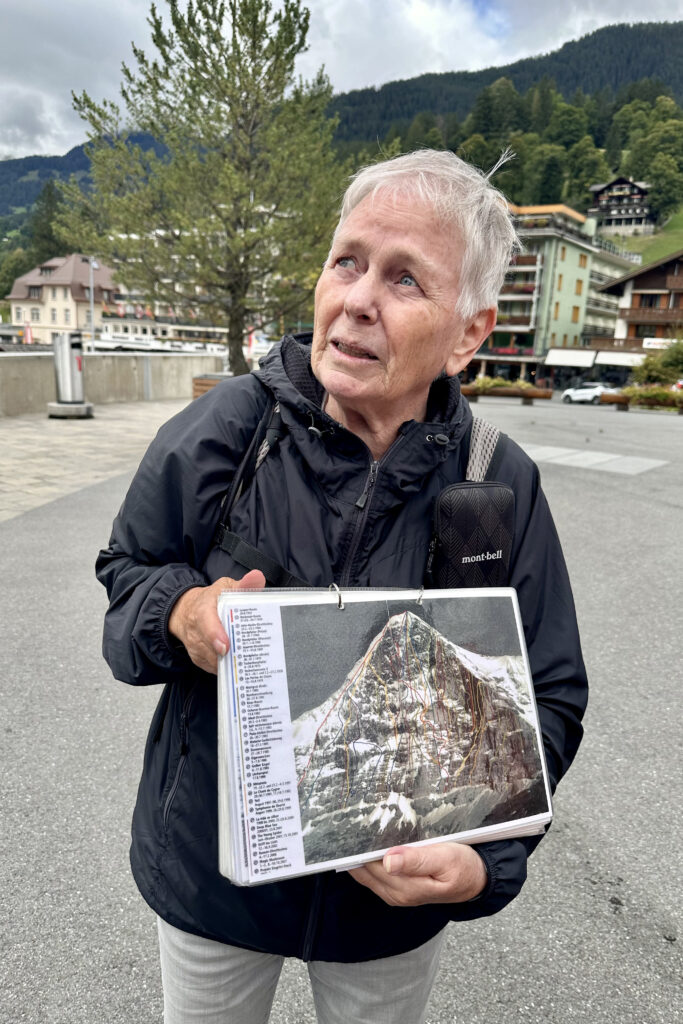
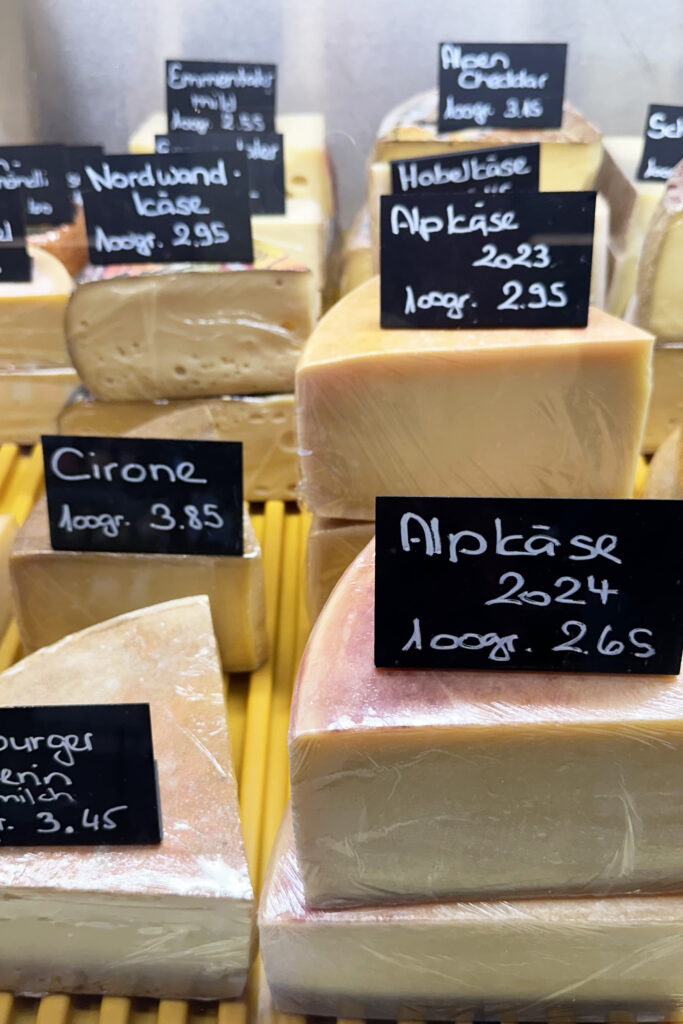
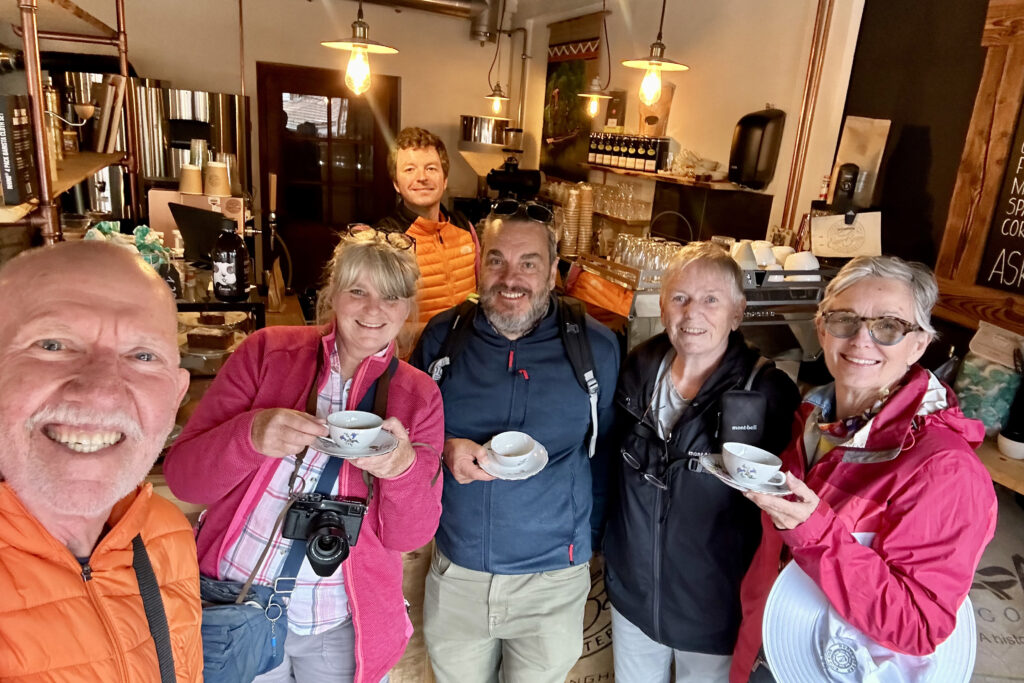
We needed a rest day, so we took the town tour. We met at a local spot and were assured it would take “about an hour.” Four hours later — after visiting the bakery, cheese shop, and coffee shop — we felt we knew a little more about Grindelwald and its history, and also that Swiss “approximately” is wildly optimistic.
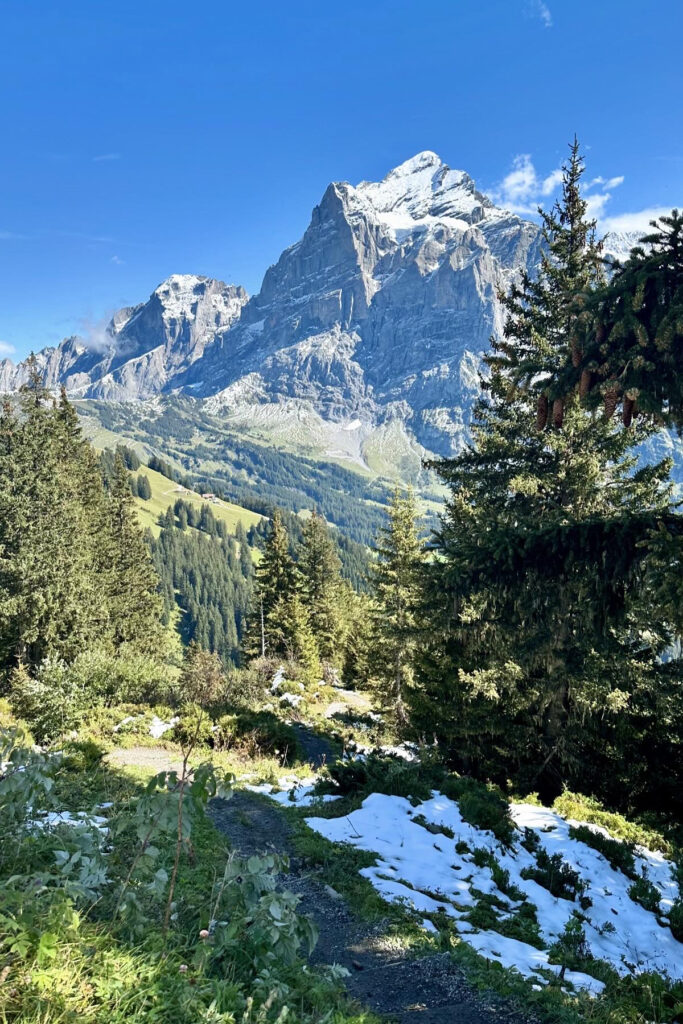
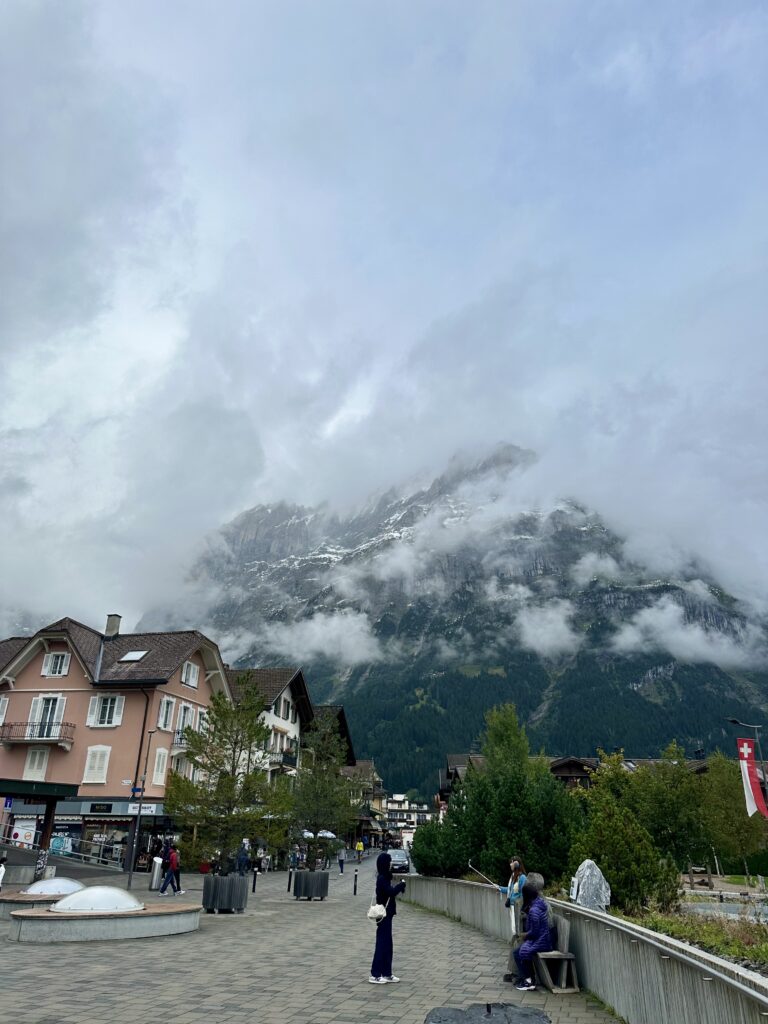
It turned out to be surprisingly good value at just £9 per person, which included cheese, coffee, and chocolate samples — essentially the Swiss version of a survival kit. Our guide informed us that the fearsome north wall of Mount Eiger (3,970m), looming over the valley and claiming more climbers than we cared to dwell on, was not the locals’ favourite mountain. Instead, they prefer the lesser-known Gross Fiescherhorn — presumably because it kills fewer people.
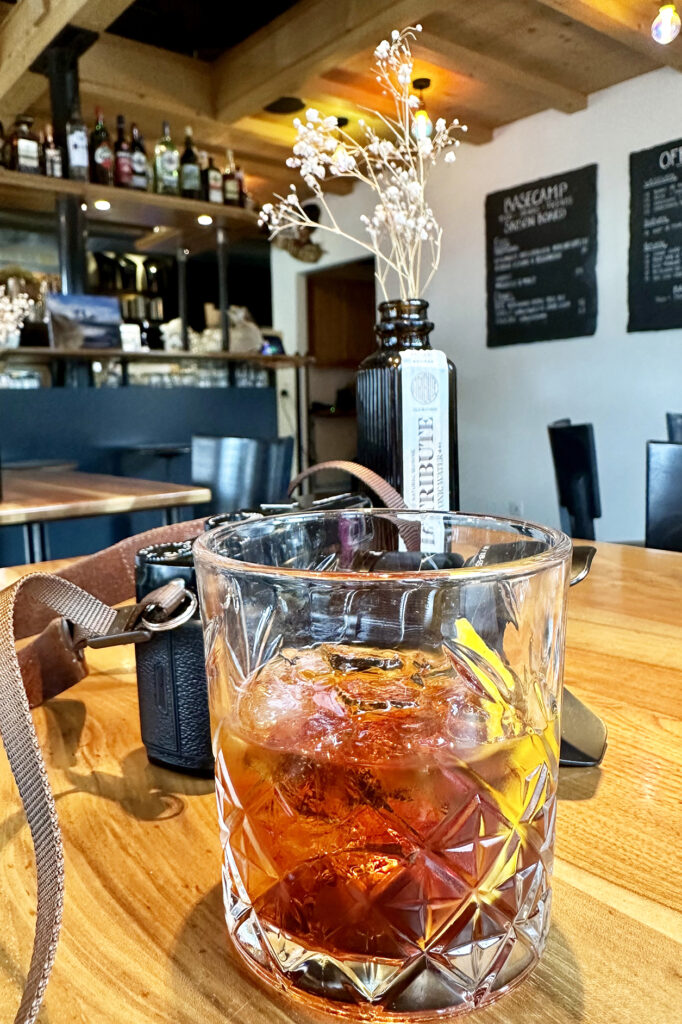
After the warm and welcoming ramble through Grindelwald — its snug chalets, lush meadows, and old-fashioned wine bars — we chose a local spot for dinner, followed by a glass of my holiday favourite: red vermouth on ice. I didn’t look at the bill. I didn’t look at Kevin’s face as he handed over his card either. I just took another sip of vermouth and hoped it wasn’t classed as a financial transaction requiring counselling.
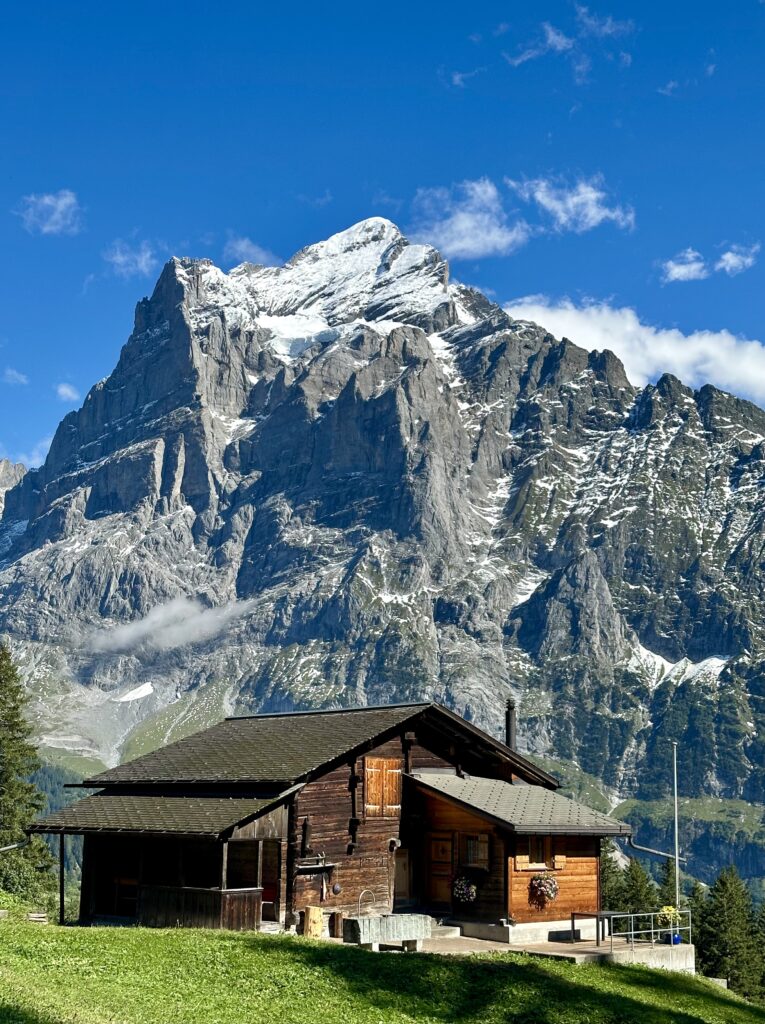
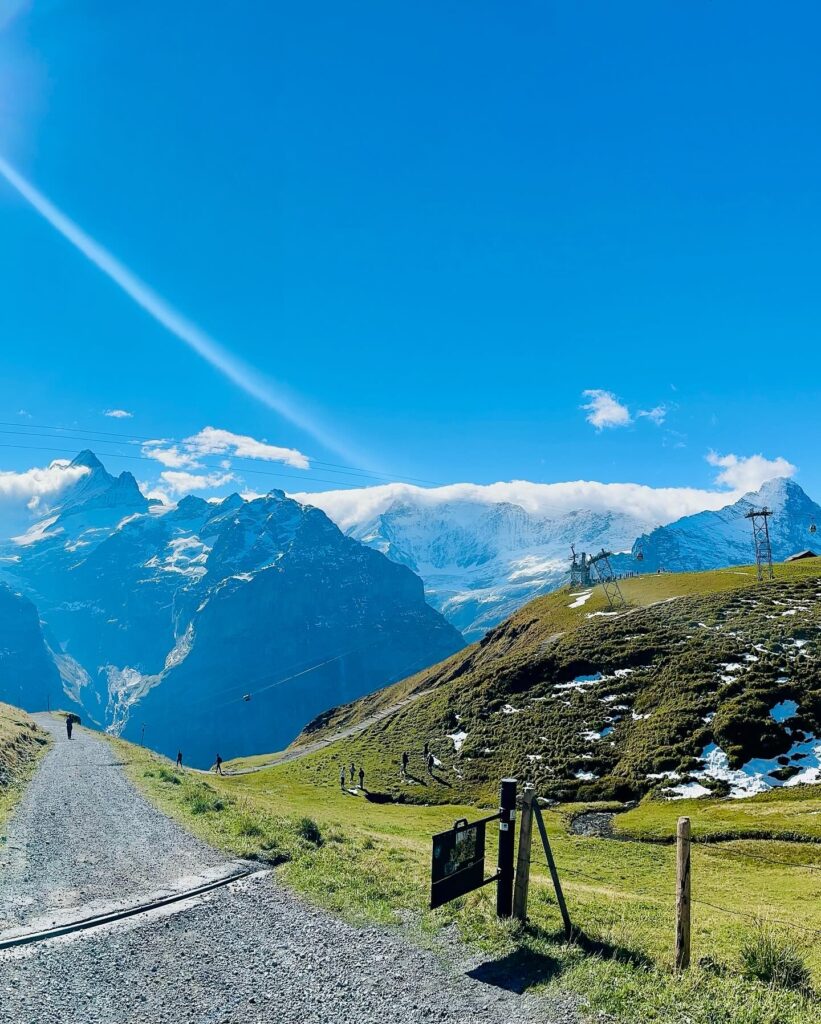
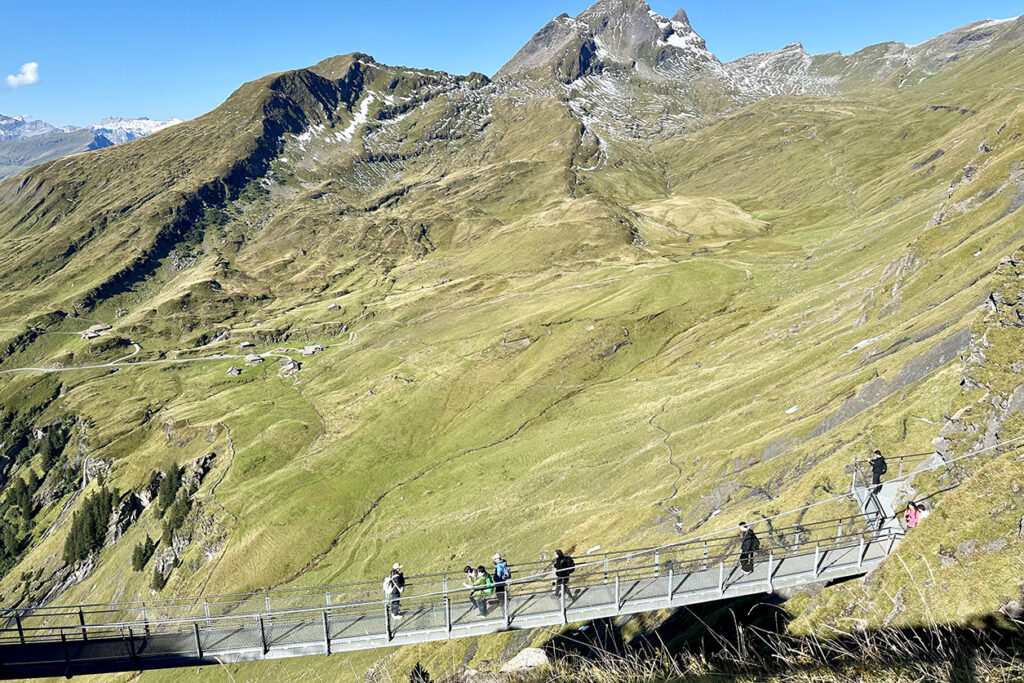
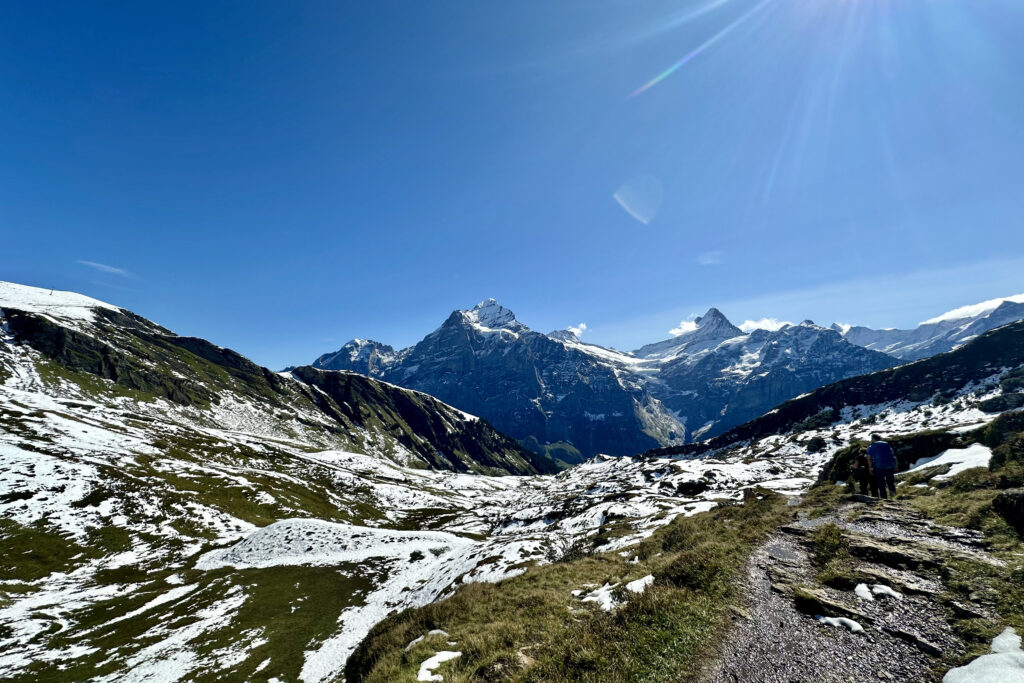
Rested, coated in Deep Heat, and raring to go the next day, we hopped on the gondola in Grindelwald to a mountain called First. Then we hiked for 50 minutes, slightly uphill, to Bachalpsee Lake. After pausing to take yet more photos of scenery that looked suspiciously like all the other scenery, we trudged through snow for three hours to reach the next gondola that would take us mercifully back down to Grindelwald.
The trail was occasionally rocky and slippery — a combination that encourages prayer — but we managed it. Another 15k in the bag. Feeling triumphant, we rewarded ourselves with a coffee and (inevitably) more Lindt chocolate. It’s all they seem to sell, and I, for one, was beginning to develop Stockholm Syndrome around it.
Back at the hotel, we collapsed onto the bed once again.


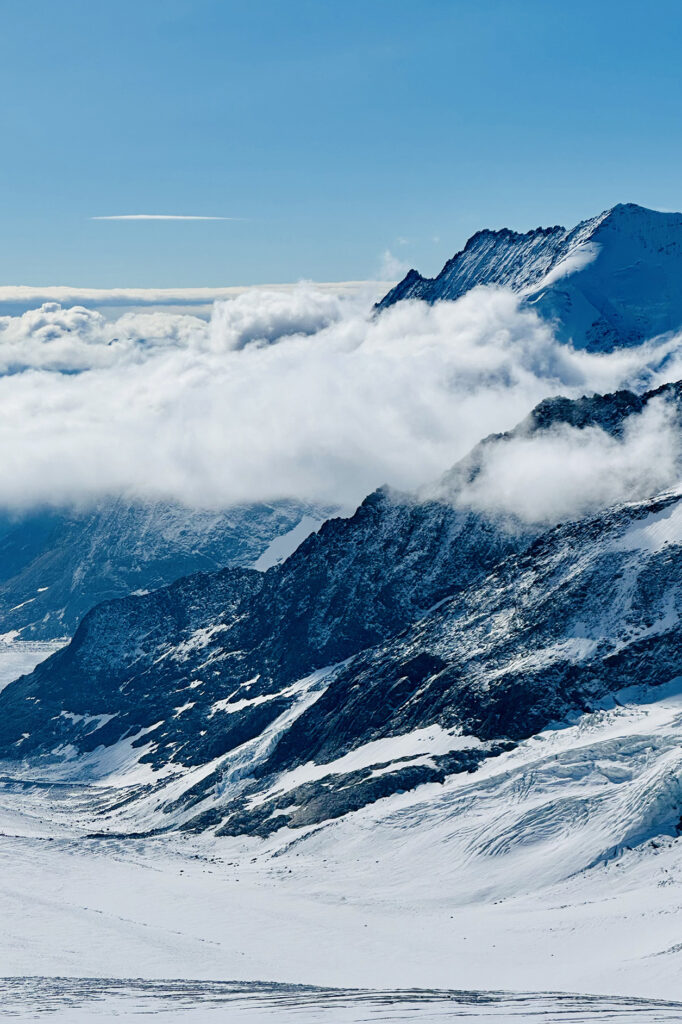
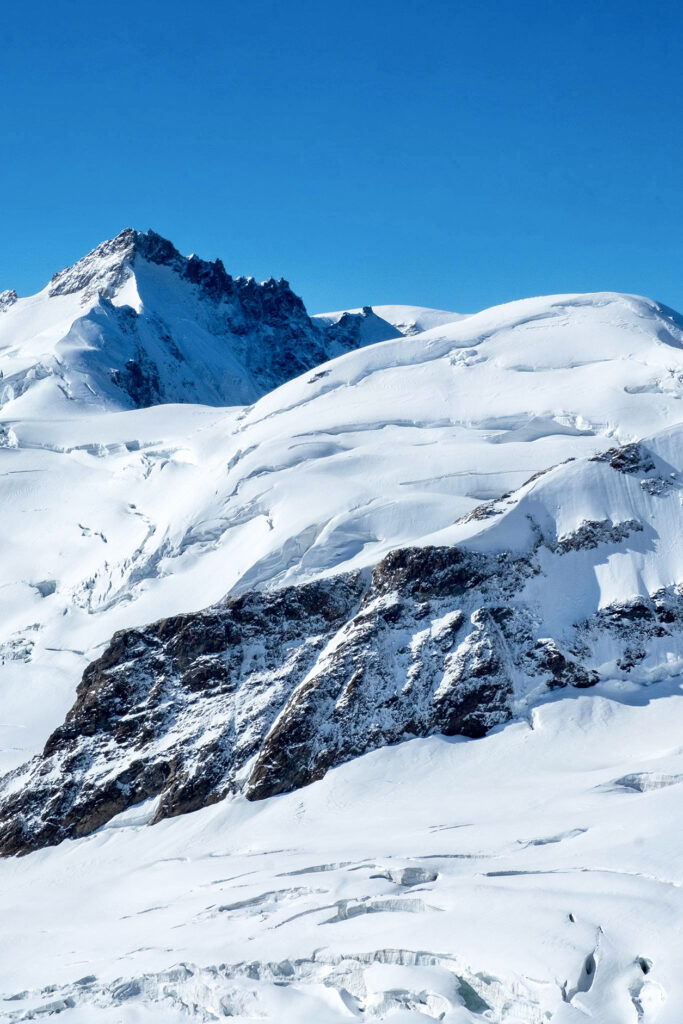
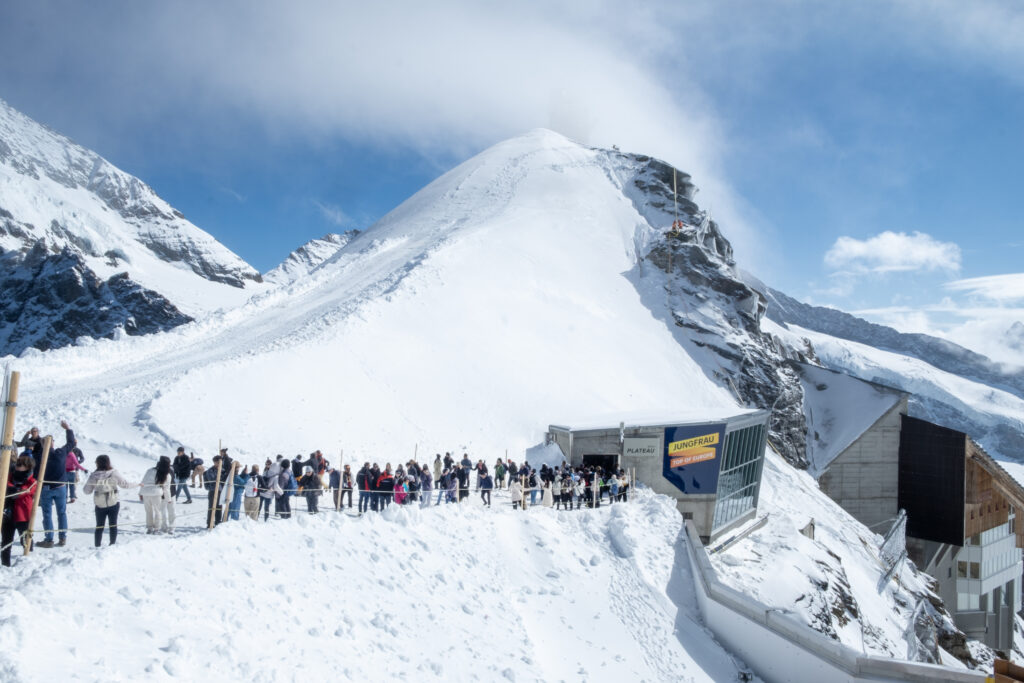
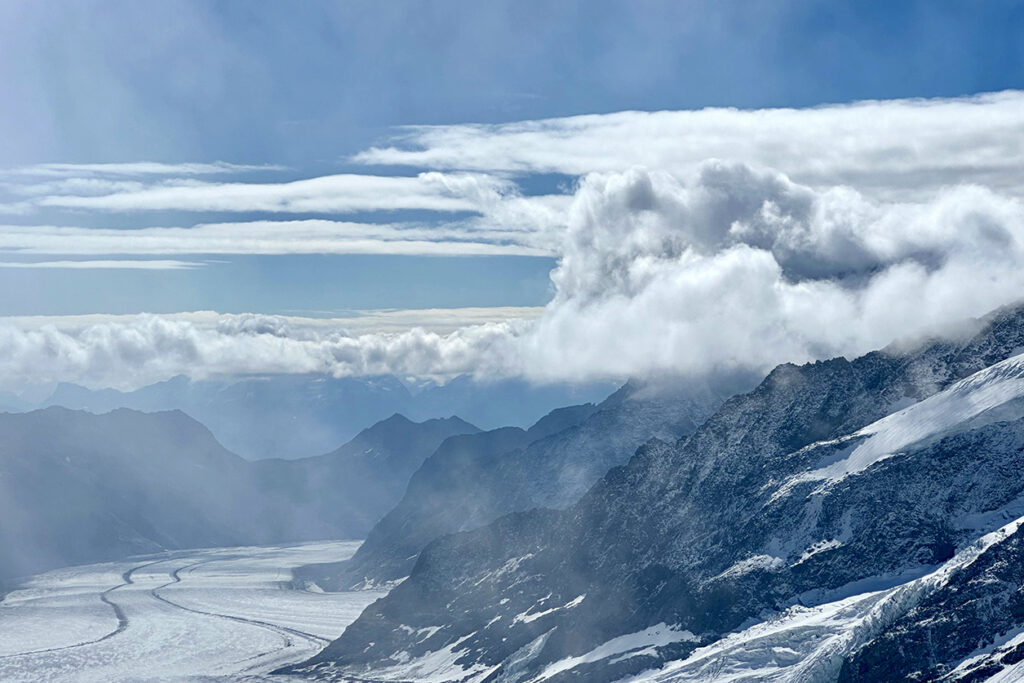
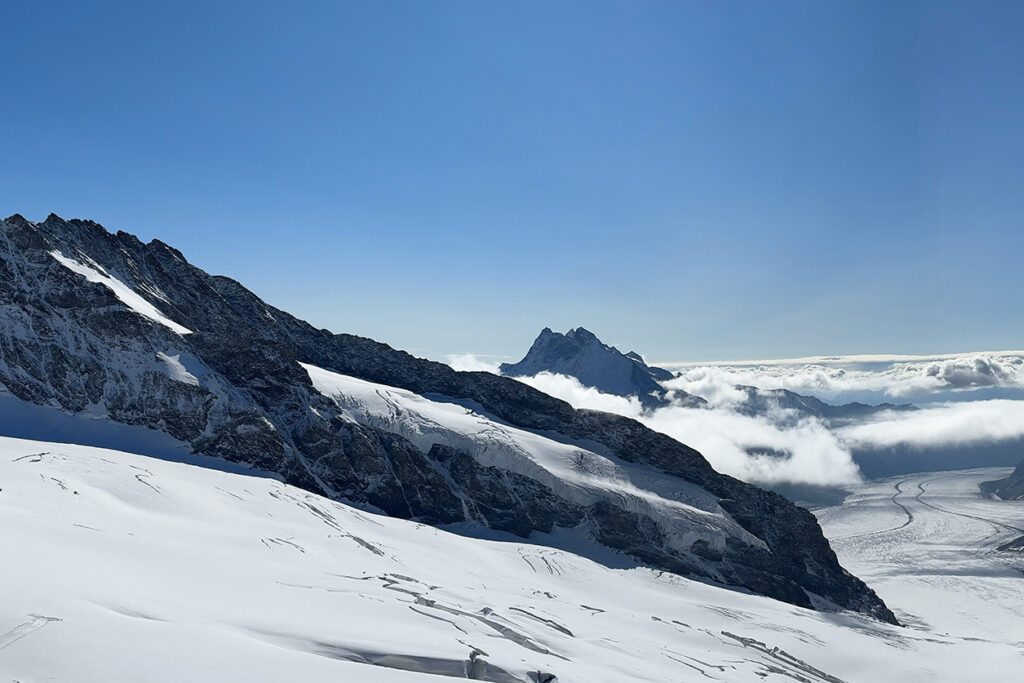
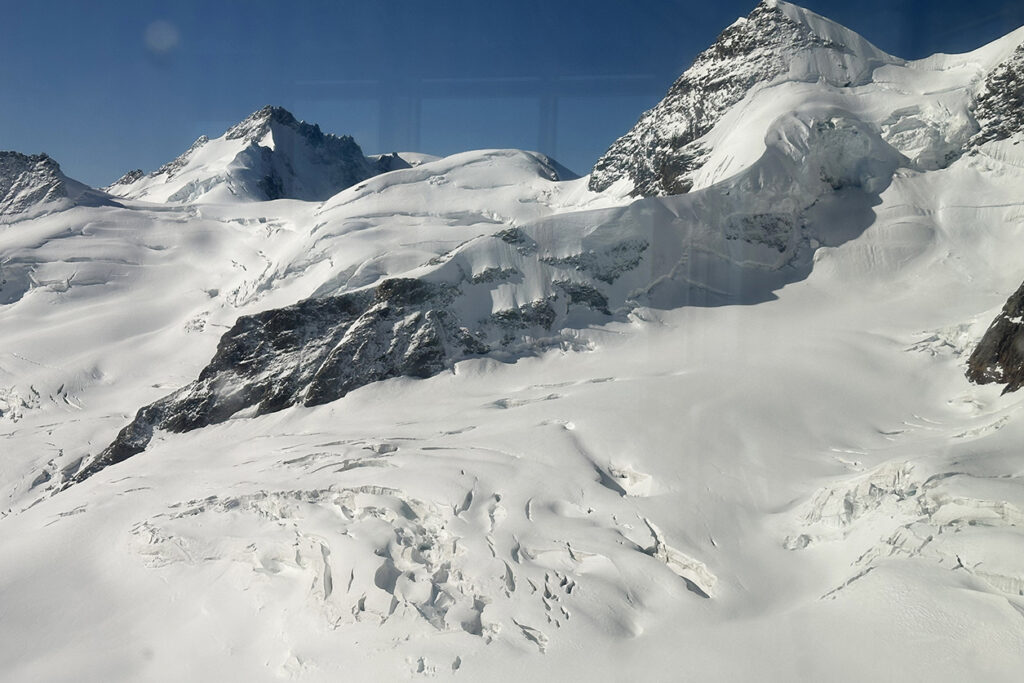
The following day, we headed for Jungfraujoch — the Top of Europe. A helpful tip: don’t book your tickets too far in advance. If the weather’s bad, you could pay a small fortune to travel thousands of metres up a mountain to look at… clouds. However, if you don’t book ahead, you risk limited availability during peak seasons.
Thankfully, the Swiss Travel Pass knocks 50% off the price — a rare moment of mercy.
There’s more to Jungfraujoch than spectacular (and increasingly familiar) views on a clear day. No matter the weather — and it changes quicker than Kevin’s enthusiasm levels — you can explore the story of one of the most impressive engineering achievements anywhere.
Opened in August 1912, the Jungfrau Railway runs from Kleine Scheidegg through the Eiger to the highest railway station in Europe: 3,454 metres above sea level. A train through a mountain. The mastermind was Adolf Guyer-Zeller — a man who, by modern standards, might have been advised to calm down and take medication — but he was determined to build it so tourists like us could gasp at altitude and complain about snack prices.
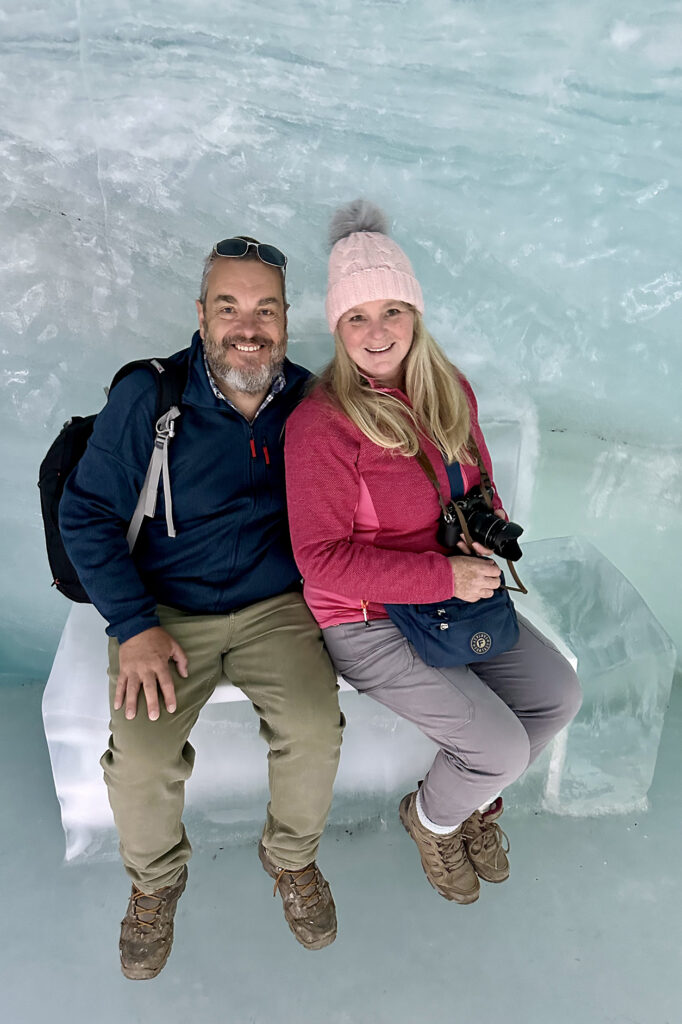
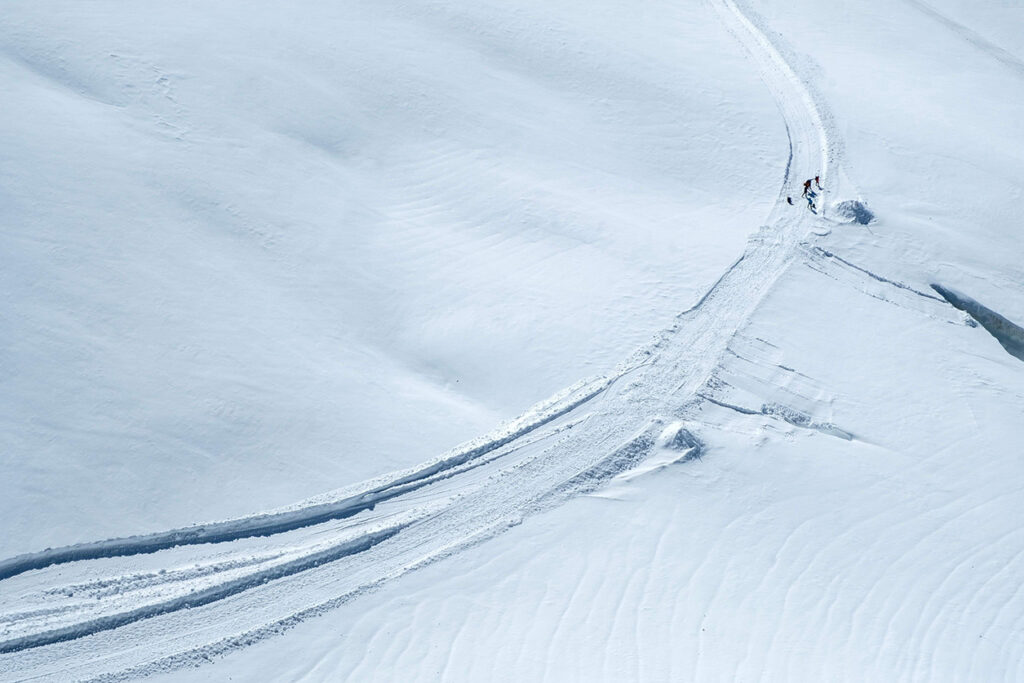
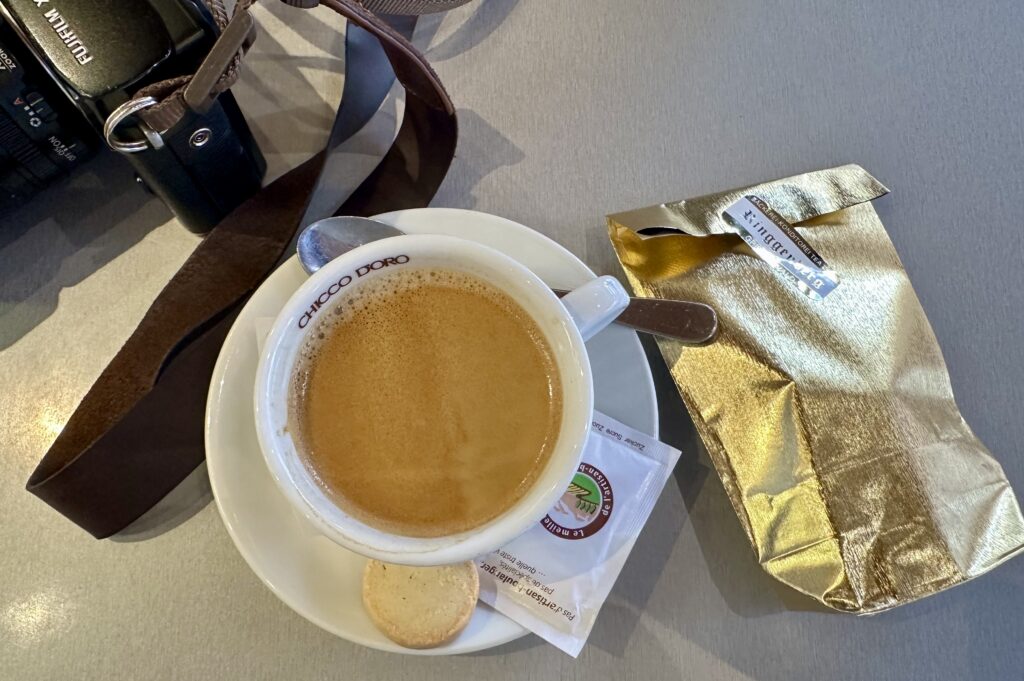
There’s also an ice palace, a lookout terrace with views of the Sphinx Observatory, and a snow park offering skiing, snowboarding, tobogganing, and a zip wire. We decided to give those a miss — it all sounded rather energetic. Instead, we opted for coffee and more chocolate from the Lindt Chocolate Heaven shop. We had to try it again, in case it tasted different at 3,454 metres.
On the way back down, we took the cog railway — a leisurely hour and a half. The ticket inspector approached, so we dutifully produced our travel passes.
“No, no, I don’t want your ticket,” she said. “Here is some Swiss chocolate. Have you tried it?”
I was too stunned by this random act of Swiss generosity to reply immediately. I looked at Kevin, smiled, held out my hand, and whispered that we’d keep it for later — perhaps for dinner if exhaustion won.
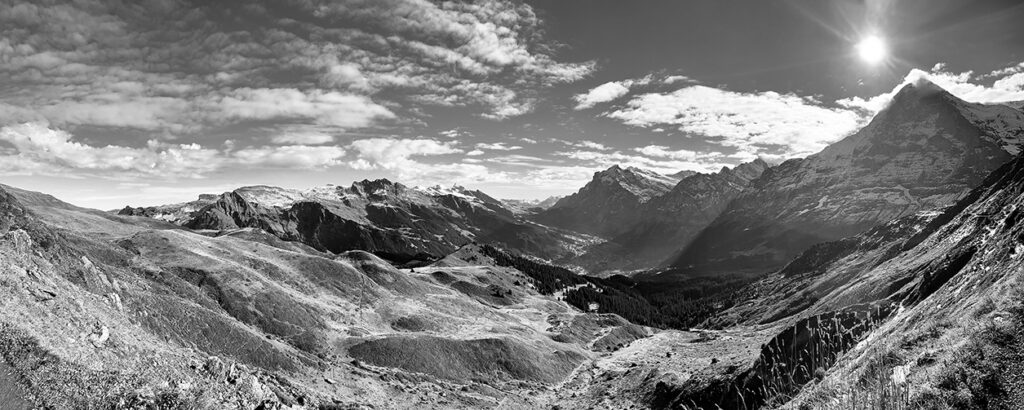
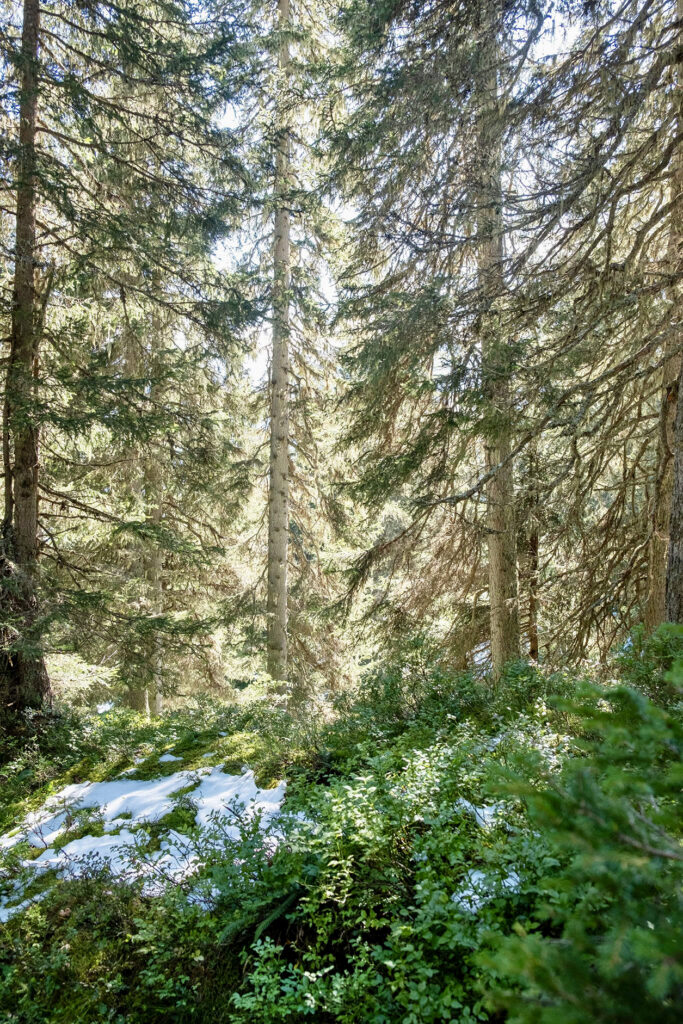
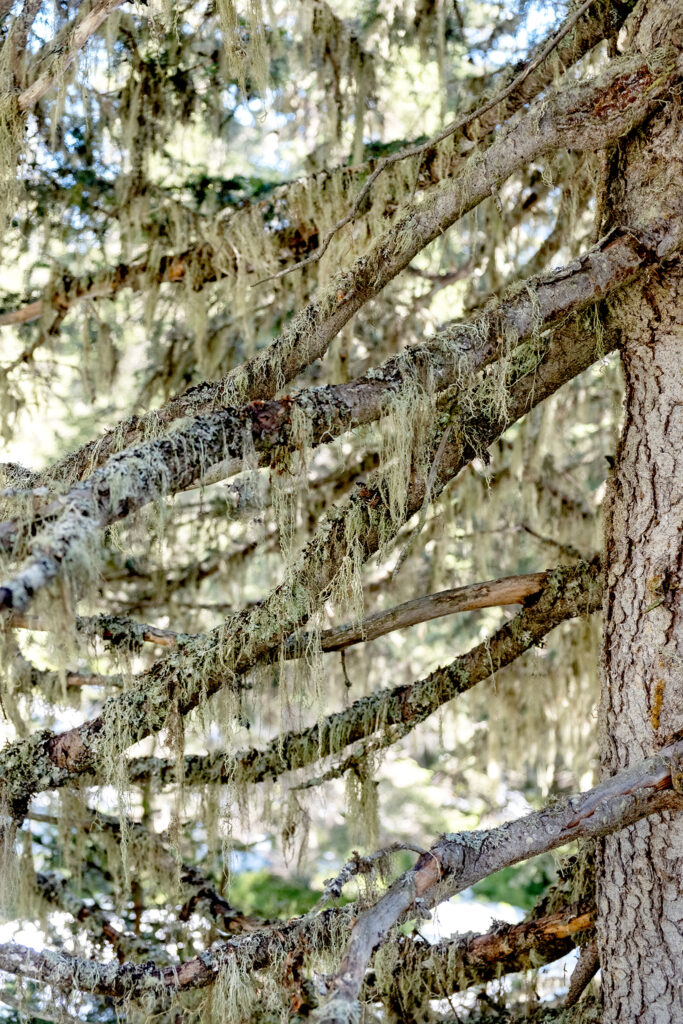
After our final breakfast in Grindelwald, we took the gondola back up to First for one last look — because apparently, we felt we hadn’t stared at enough mountains yet. From there, we walked back down to the village, approximately 13k, winding through lush green forests. The trees were tall enough to block any more alpine views — a welcome break, if we’re honest.
Then something extraordinary happened. A delicious smell drifted through the trees, and I couldn’t quite place it. Kevin pointed to a pile of freshly cut pine. Instantly, I recognised it — the unmistakable scent of B&Q. For a moment, I felt genuinely at home, picturing myself trailing behind Kevin as he selected timber for yet another DIY project that would occupy the kitchen table for months.
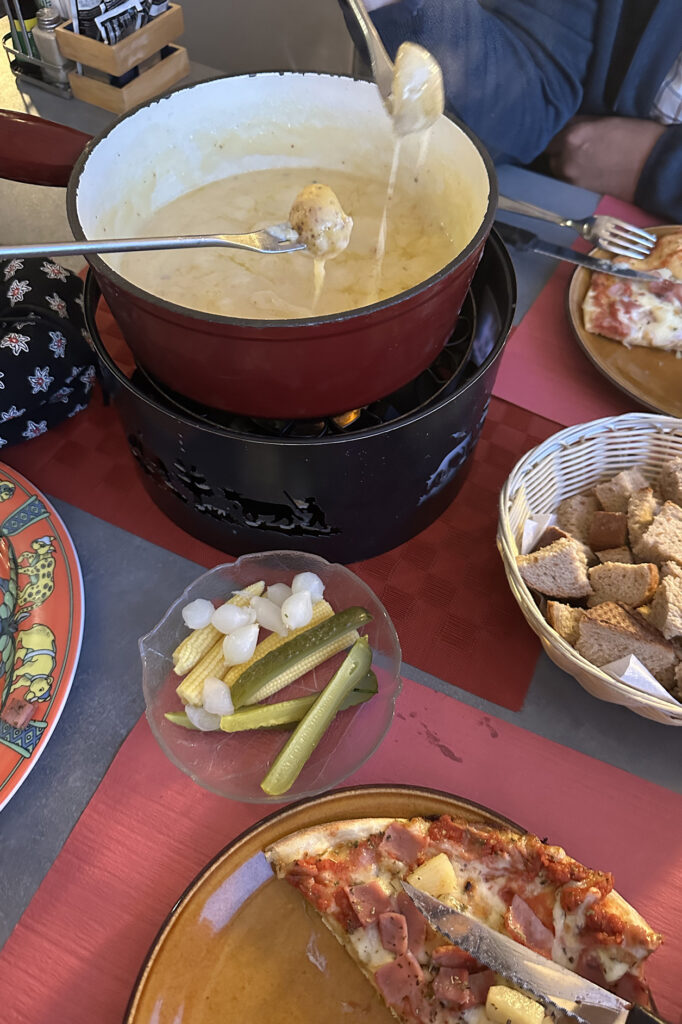
That evening, we decided to try Switzerland’s culinary staple: cheese fondue. Bread and potatoes dipped in melted cheese — the locals say it’s divine; we say, oh well, when in Rome. Just in case we didn’t like it, I ordered a Hawaiian pizza as backup. Insurance food.
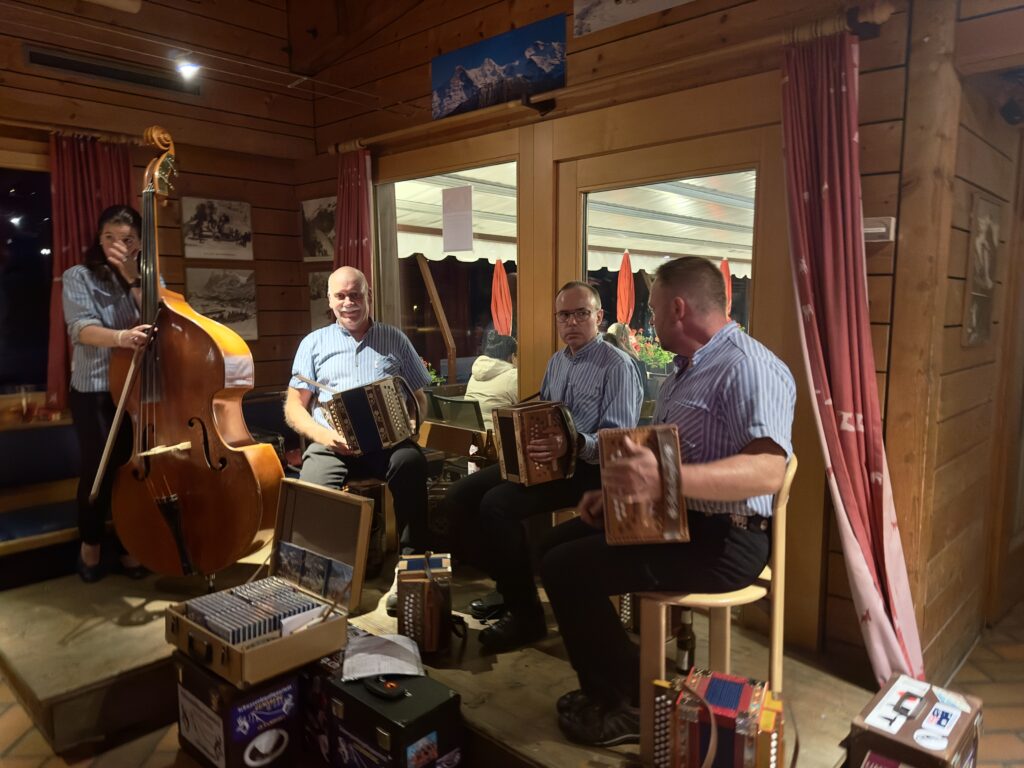
As we tucked in, our ears had only just stopped ringing from the incessant cow bells when three men and a lady appeared wielding accordions and a double bass, launching into traditional folk tunes.
Kevin, watching them with mild alarm, murmured, “This is a very long song.”
“I think it’s tune number six,” I replied.
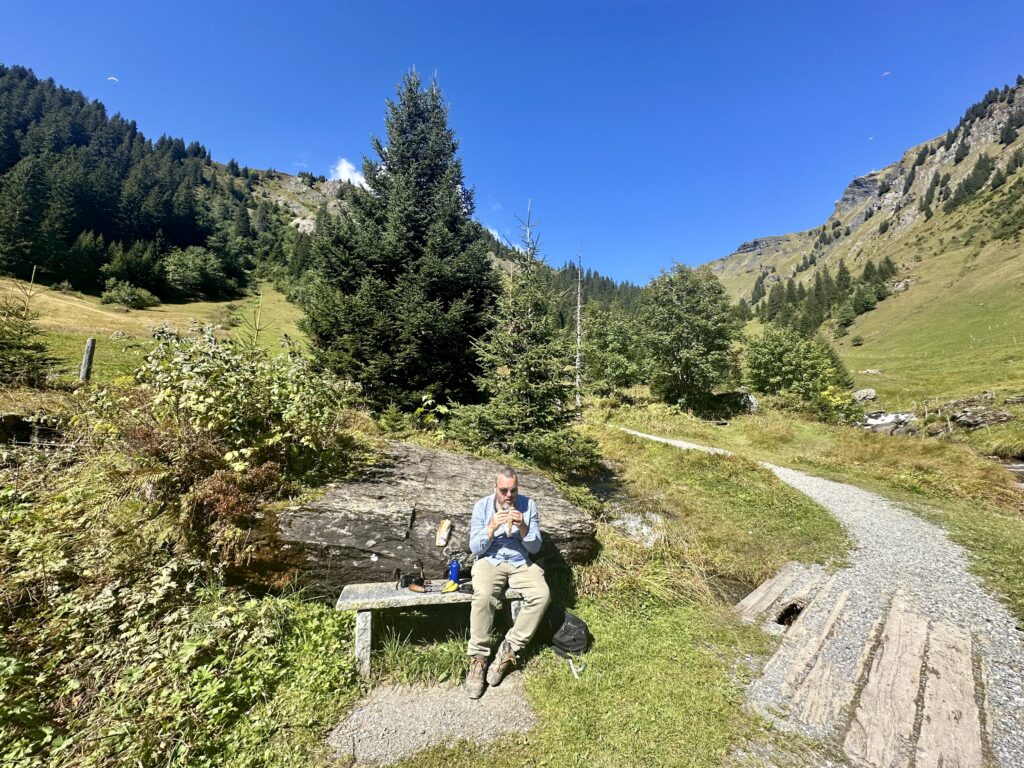
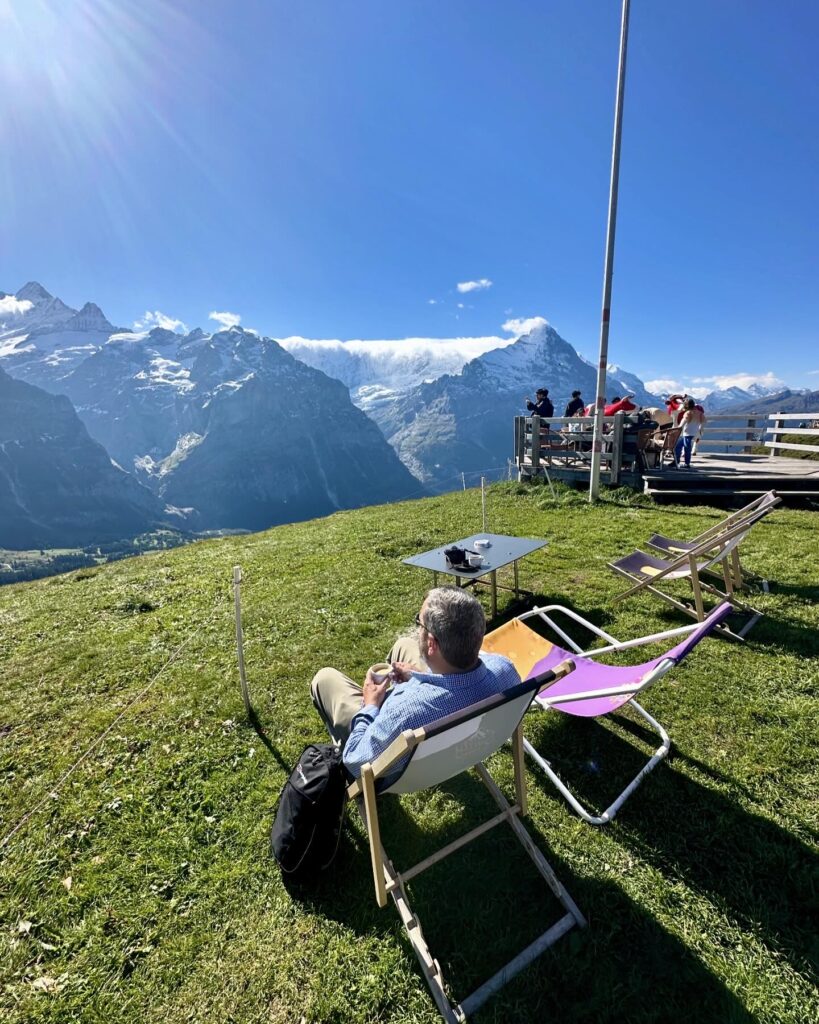
Grindlewald, if it were a contestant on Strictly, it would lift the glitterball with unnerving ease. If it were Miss World in 1972, it would wear the crown and sash without competition. If it were in the Olympics, it would claim gold while looking annoyingly photogenic, and it would sweep every landscape photography award going.
But what truly sets Grindelwald apart is its people. They aren’t just warm and friendly — they appear to have mastered hospitality as an Olympic discipline. Luckily for us, they also speak perfect English. And the cuisine — including the cheese fondue we cautiously endured — was a genuine treat. I must admit, the chocolate is world-beating, too.
So, would we return? Absolutely — once our legs forgive us and our bank account stops trembling. Grindelwald challenged us, charmed us, fed us alarming quantities of cheese, and forced us to admire scenery whether we wanted to or not. It reminded us that adventure is still possible in our fifties (and sixties), even if it requires Deep Heat, sideways walking, and emergency pizza. Switzerland — we’ll be back. But next time, we’re bringing binoculars, stronger thighs, and maybe our own chocolate.
Where to stay
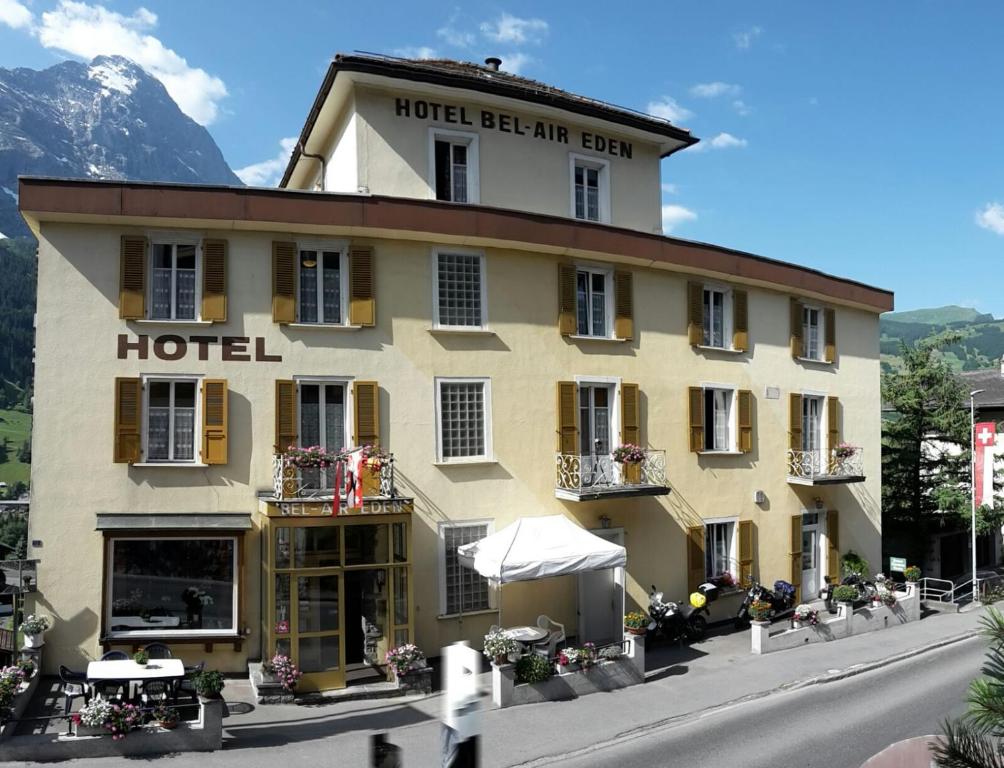
There are lots of options to keep the costs down in Grindlewald. Lots of air BNBs and hotels range from budget to we have more money than we need. We opted for Bed and Breakfast at Hotel Bel-Air Eden, just across the road and directly opposite the train station – a 3-minute walk. The bus station is about the same distance too. It’s a two star hotel with 30 beds and is centrally located. It is run by Peter and Dianela, who can’t do enough for you. The rooms are a little dated but have rustic charm and are very warm and cosy. We had a twin room budget, saving a bit of money and not having a view of the Eiger, but let’s face it, you could see it from everywhere else and at breakfast, which was terrific value for £70 per night in low season.
For the duration of your stay, you will also receive a guest card, which gives you free admission to the indoor swimming pool and other discounts. I think most hotels do this.
Check out the website https://www.hotel-belair.ch/en/home
Where to Eat
Go to the Co-op in the village. They have everything – Tuna baguettes, chocolate and Vermouth!
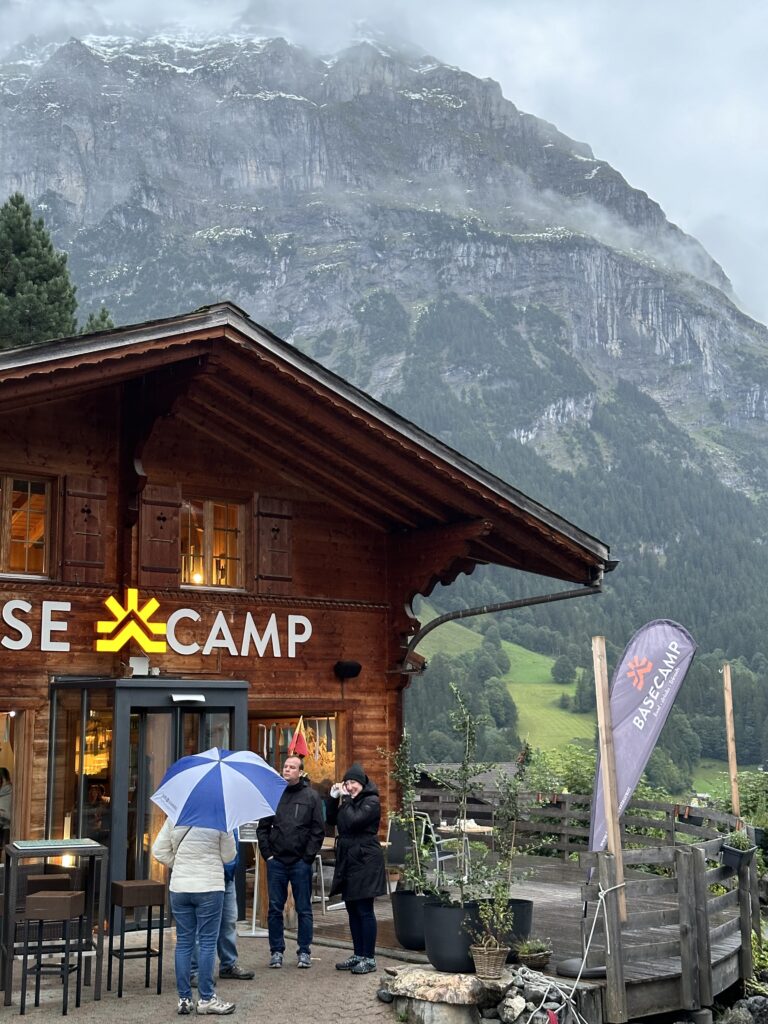
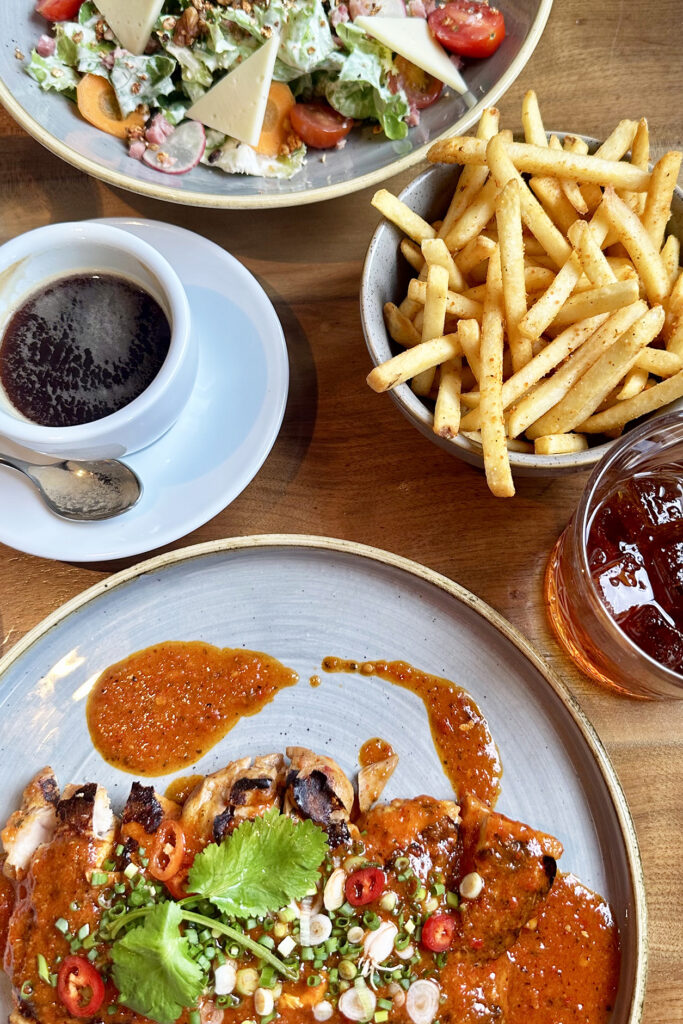
For a reasonably priced dinner, try Basecamp Restaurant. Great Peri Peri Chicken and vermouth!
https://www.basecamp.restaurant/en
Travel in Switzerland
We bought a 4 day pass (approx £260 per person) which included unlimited travel by train, bus and boat, unlimited travel on premium panorama trains (seat reservation fees and/or surcharges apply), unlimited use of public transport in more than 90 towns & cities.
Free admission to more than 500 museums. Mountain excursions included Rigi, Stanserhorn and Stoos
Discount of up to 50% on other mountain excursions
Please check the website as there are lots of options.
https://grindelwald.swiss/en/service/guest-information/overview-of-tickets.html
We bought our return train ticket from Zurich to Grindelwald (changing at Interlarken) at the station, which costs £294 for two people.
https://swisrails.com/en/train/zurich/grindelwa
Would we return – in a heartbeat.
Would we do anything differently – now we know about the Co-op we would stock up on snacks and drinks for the evening on day one.